 Open Books
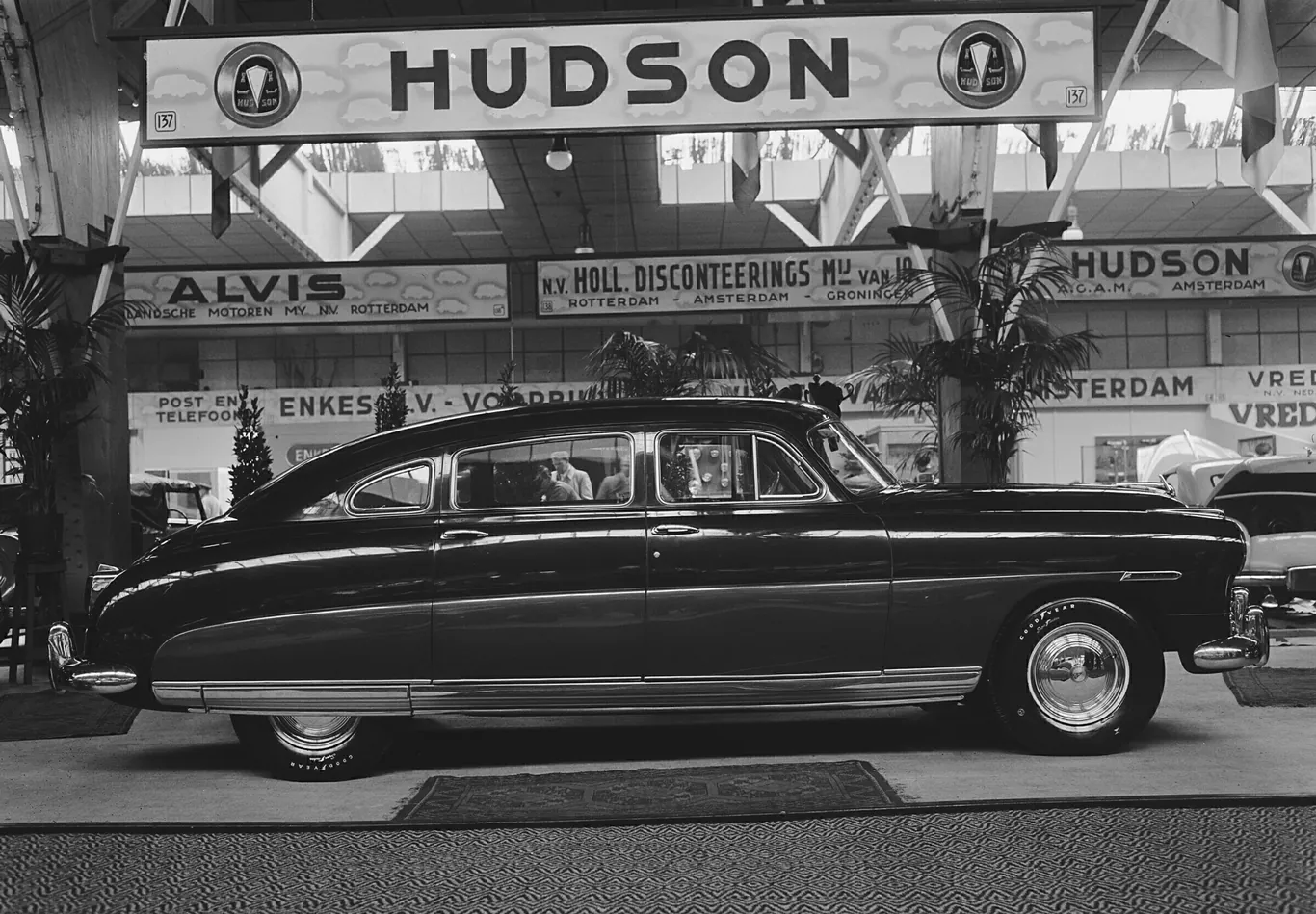
Picture at the top: a Hudson Commodore on its stand at the Amsterdam motor show, 29 April 1948. Photo: Snikkers / Anefo, CC0, via Wikimedia Commons (Nationaal Archief).

How Hudson went from 300,000 cars to nothing
In 1929 one company on the east side of Detroit built about 300,000 cars.1 Only two makes of car sold more: Ford and Chevrolet.2 Twenty-three years later its Hornets won 27 of the 34 races in NASCAR’s top series that season.3
The company was named after the Detroit department-store owner who paid for it.4 Then the money ran out. On 25 June 1957 the last Hudson left an assembly line in Kenosha, Wisconsin, and the name was gone.5 The merger that ended Hudson created the company that bought Jeep.6
This is the story of the five decisions that took Hudson from third in America to nothing in 28 years.7 Four of them were made by one man, a stenographer who rose to run the company.8 In 1948 he built a car so good, and so costly to tool, that Hudson could never afford to replace it.9 General Motors and Chrysler brought out new bodies and new V8s.10 Hudson polished.
J. L. Hudson’s money and the first Hudson car, 1909
Detroit, 3 July 1909. A small factory on Mack Avenue. The first Hudson rolls out into the street.1112 It is a plain little car: 20 horsepower, $900.13 The man selling it is 29 years old.14
In 1901 Roy Chapin had driven an Oldsmobile out of Detroit and arrived in New York seven and a half days later, at 14 miles an hour, in time for the motor show, which was the point.1516 By 1908 he was running a car company for a New York buyer, and he wanted one of his own.17 He and a few other men who had learned the trade at Olds wanted to build a car for under $1,000, with Chapin as president and the engineers doing the engineering.1819
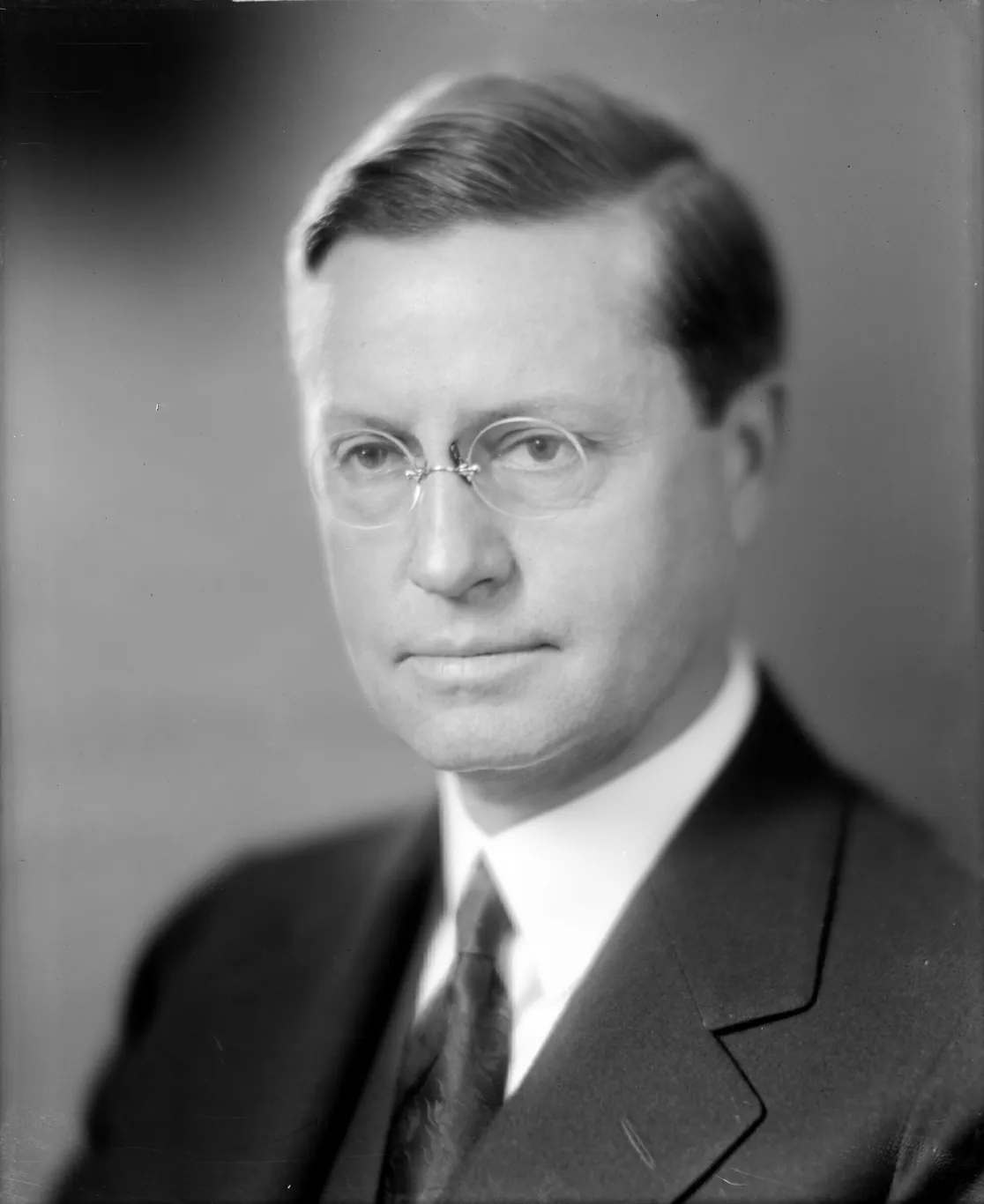

What they lacked was the money. One of them, Roscoe Jackson, was married to the niece of J. L. Hudson, who owned the department store that carried his name.20 The store owner, the story goes, was reluctant.21 His niece and her husband talked him round.22 He put up the money, took the chair, and lent the company his name, which stayed on cars for 48 years.2324

A department store lives by changing its windows every season. Keep that in mind for 1948.
The company had been incorporated that February, and by one account 4,000 people sent in a deposit of $25 on the strength of the first advertisement.2526 Hudson sold about 4,000 cars in its first year.27 The car had been drawn by the man who had been chief engineer at Olds, and it was built in a factory that had belonged to someone else.2829
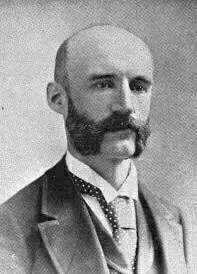
Within a year of that first car, a young stenographer named Barit joined the purchasing office to take dictation.30 Remember the name. By 1936 he will be taking dictation from nobody.31
Four thousand cars a year in someone else’s old factory was not going to last. Where do you build the next four thousand?
The Jefferson Avenue plant and the Hudson Super Six
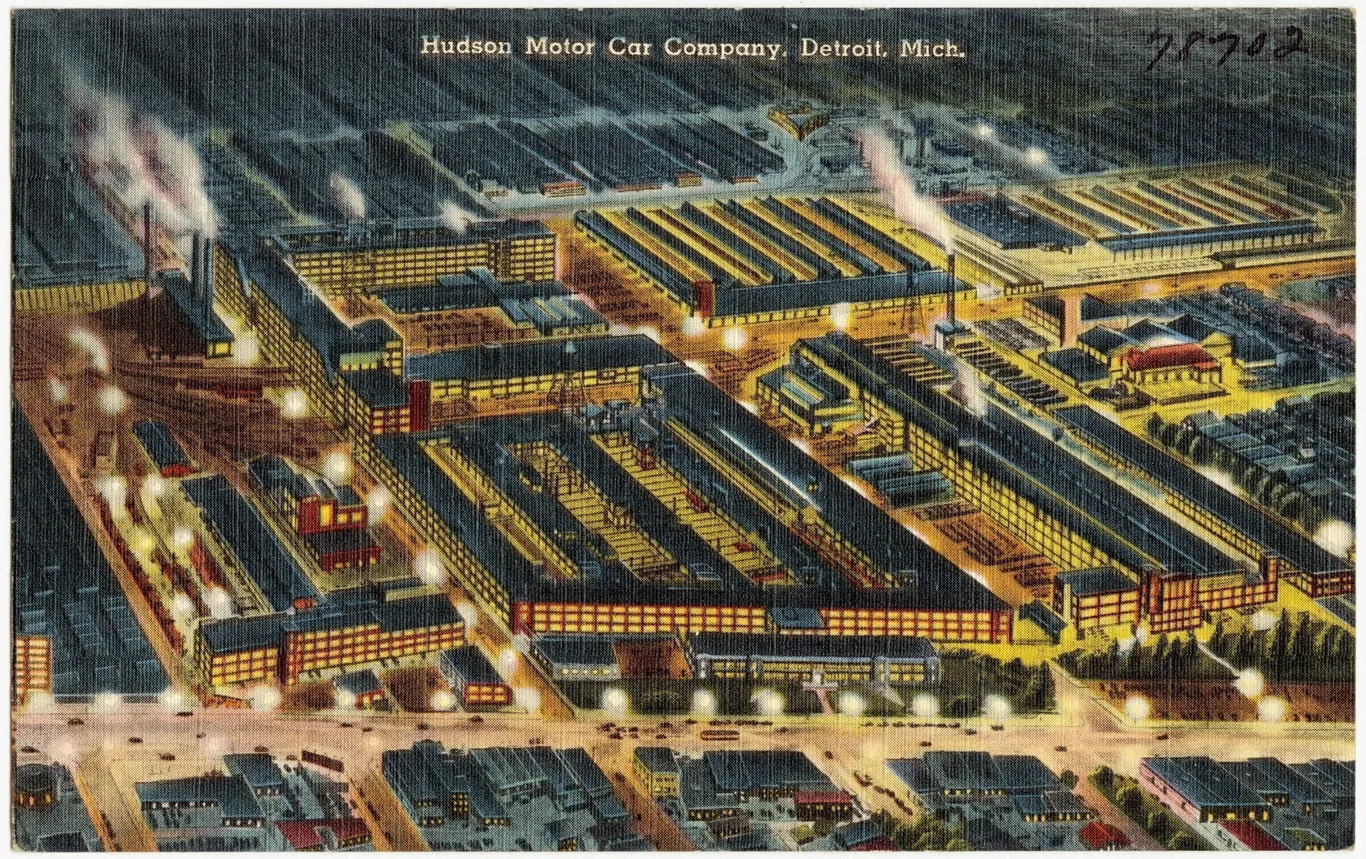
On the east side of the city, at the corner of Jefferson Avenue and Conner, Hudson bought 22 acres and hired an architect.3233 The new plant opened in the fall of 1910, a year after the first car.34 The postcards show it full. It will not stay that way.

From here Hudson sold cars in the middle of the market: above the Ford, well below the millionaire’s. By 1915 it was building about 11,000 a year.35 In January 1916 it put a new engine in them, and charged $1,375 for the car around it.3637
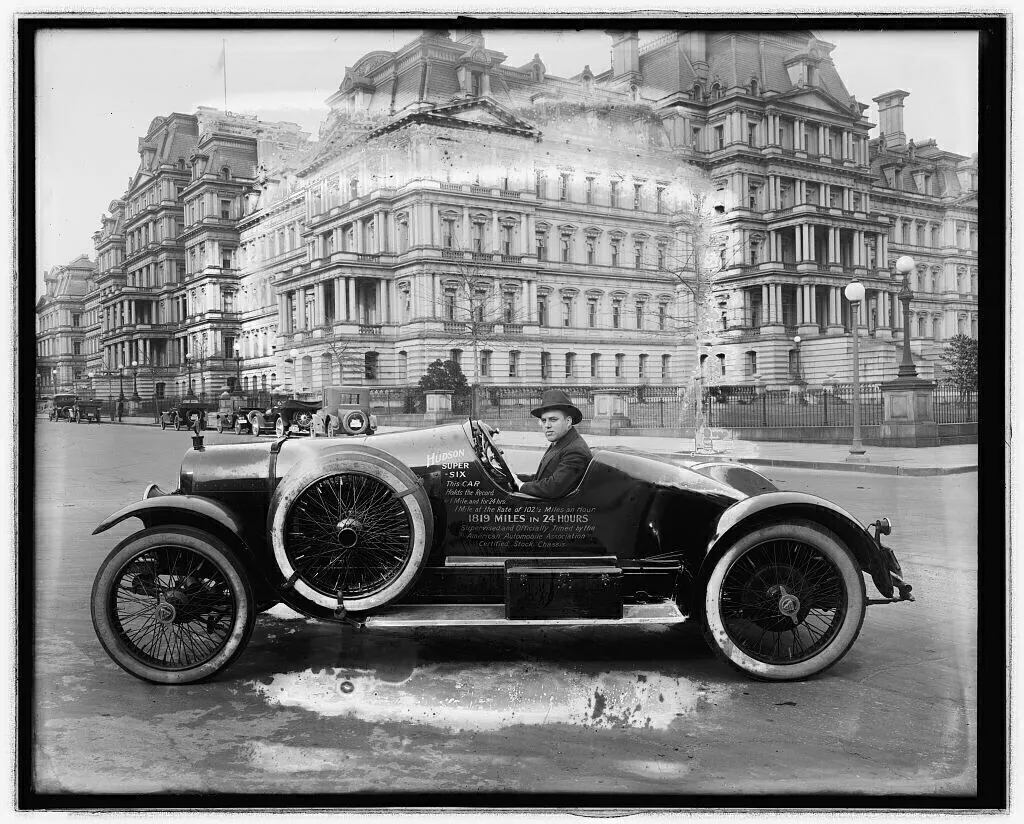
The Super Six had six cylinders and a patented crankshaft with weights on it, so it could spin faster without shaking itself to pieces.38 In its first year Hudson set records with it. A racing driver took a Super Six onto the hard sand of Daytona Beach and was timed over a mile at 102 miles an hour.39 Remember the sand. The same driver set a stock-car record up Pikes Peak that stood, by one account, for eight years.40

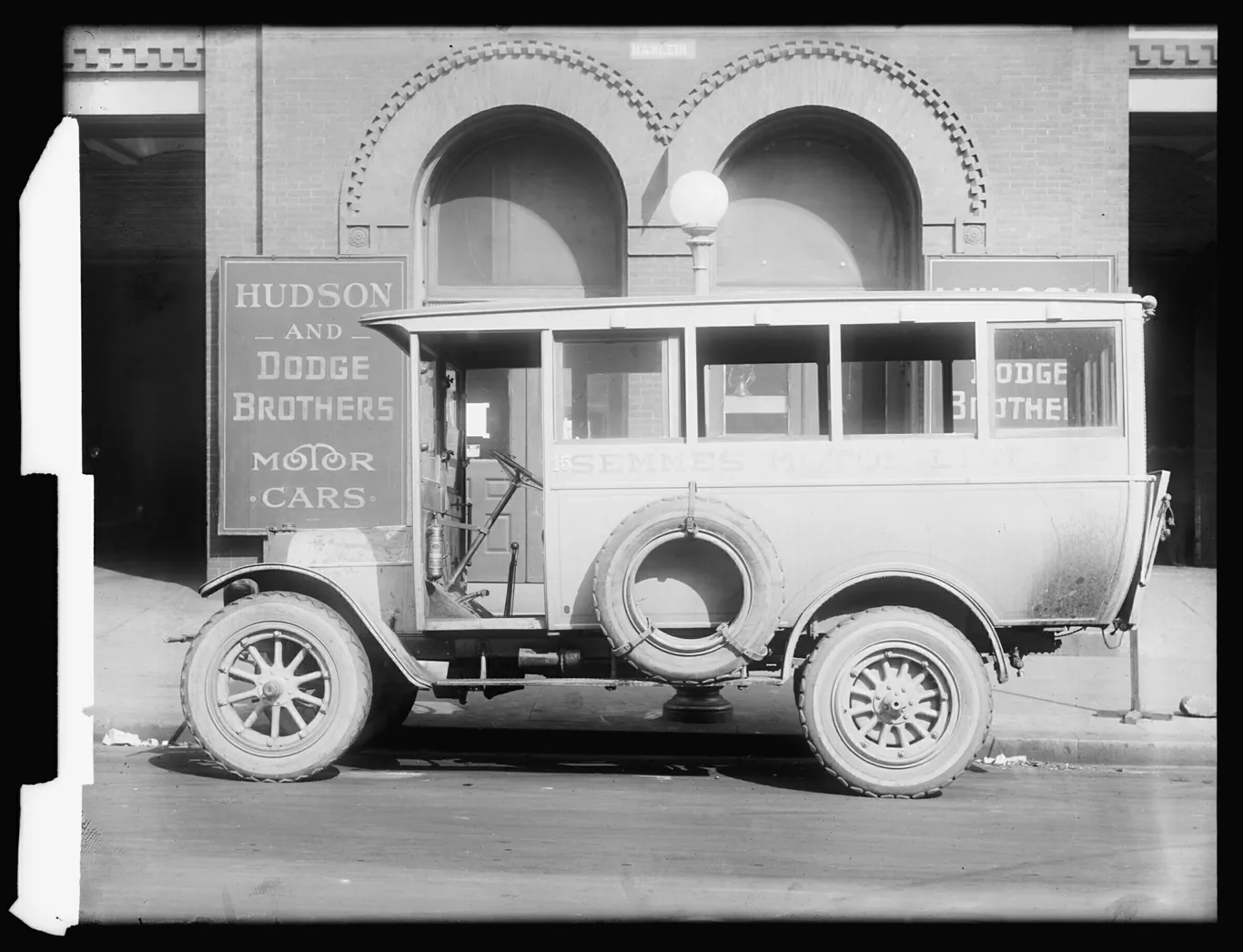
In 1916 a Super Six also went from San Francisco to New York in a little over five days, stopped for eight hours, and drove back.41 Deliveries doubled that year, and by 1917 a Super Six banner hung in a dealer’s window in San Jose, California, more than 2,000 miles from the plant.4243 Hudson called itself the world’s largest maker of six-cylinder cars, which is the kind of thing a company says when it is true enough and nobody is counting.44
,_July_1917_LCCN2016852589.jpg)
By 1918 Hudson’s plant was on the postcards.45 It was still a long way from third in America. Between Hudson and third place stood every family in the country that had never bought anything but a Ford. How do you reach them?
The Essex coach and a closed car for everyone
In 1919 about one new car in ten had a roof.46 The other nine were open to the weather, with a canvas top for optimists.
In January 1919, in Los Angeles, Hudson put a second name on a stand: Essex.47 It was a smaller car, with a four-cylinder engine the size of a Ford’s that made nearly three times the power.48 Cheaper than a Hudson, quicker than a Ford. That year one ran for 50 hours round a track in Cincinnati at better than 60 miles an hour, so nobody could say the cheap one was fragile.49
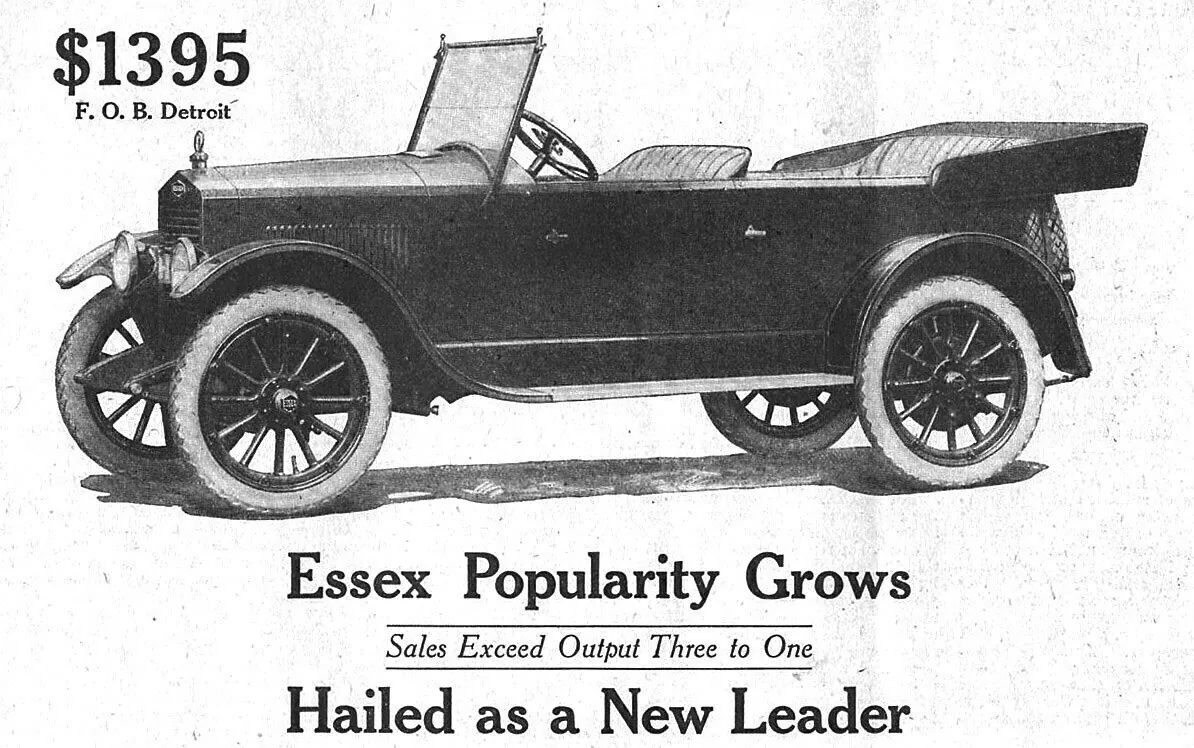

In 1922 Essex did the thing the company is remembered for. It offered a closed car, a two-door coach with a proper roof, for $1,495.50 That was $300 more than the open car.51 Within three years the coach cost no more than the open car, and the roof had become free.52
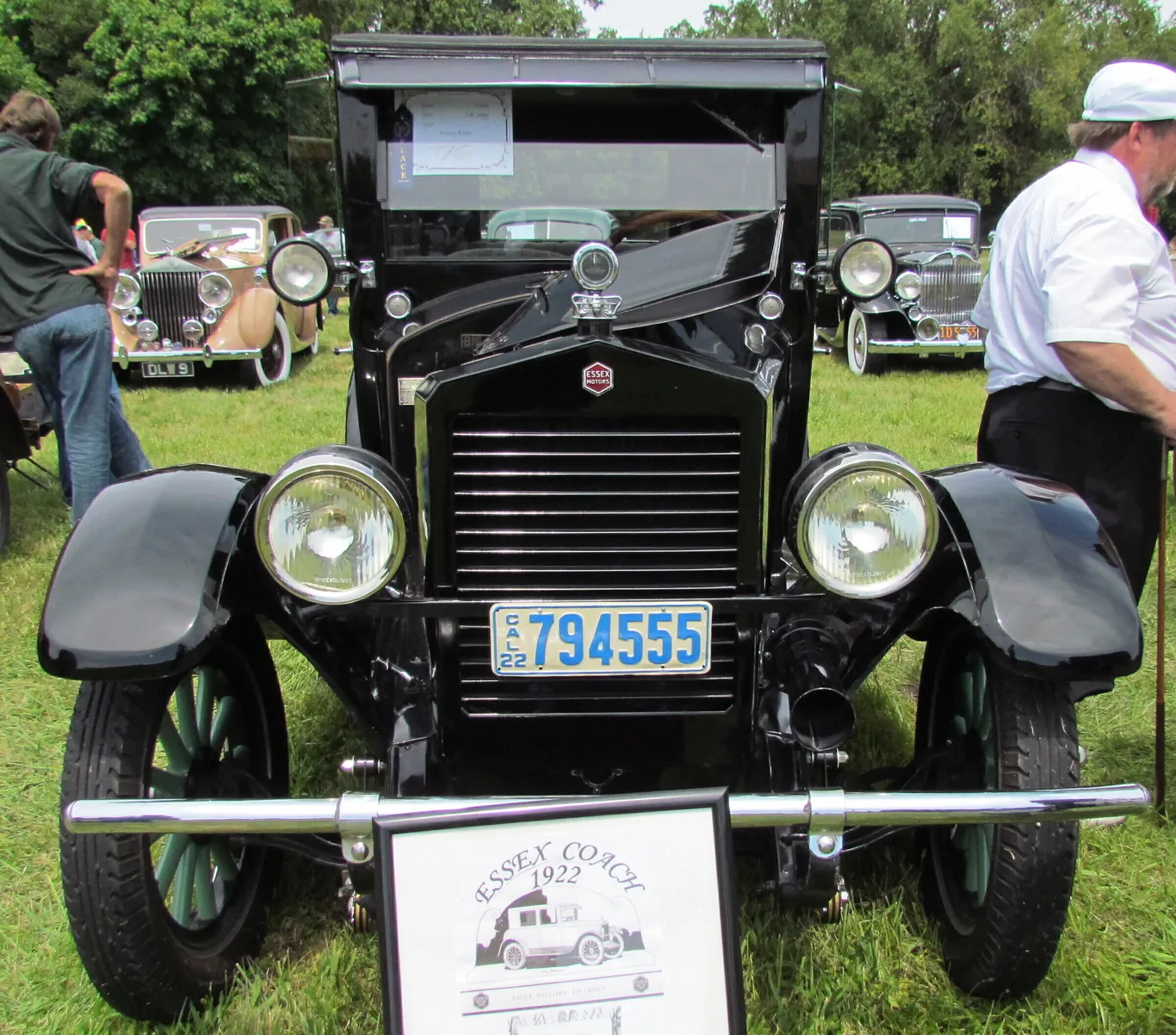

By 1927, on the count of a journalist writing in 1931, more than eight new cars in ten had one.53 The Essex coach is credited with starting that.54 Essex outsold Hudson from the day it appeared, and more than a million of them were sold before the name was retired.5556
In 1921 the two names together sold about 25,000 cars; in 1925, about 264,000.5758 The plant on Jefferson Avenue grew, and in 1925 a second plant went up on Conner Avenue to press the bodies.59 In 1929 Hudson and Essex together built about 300,000 cars.60 Only Ford and Chevrolet sold more, and both were a very long way ahead.61
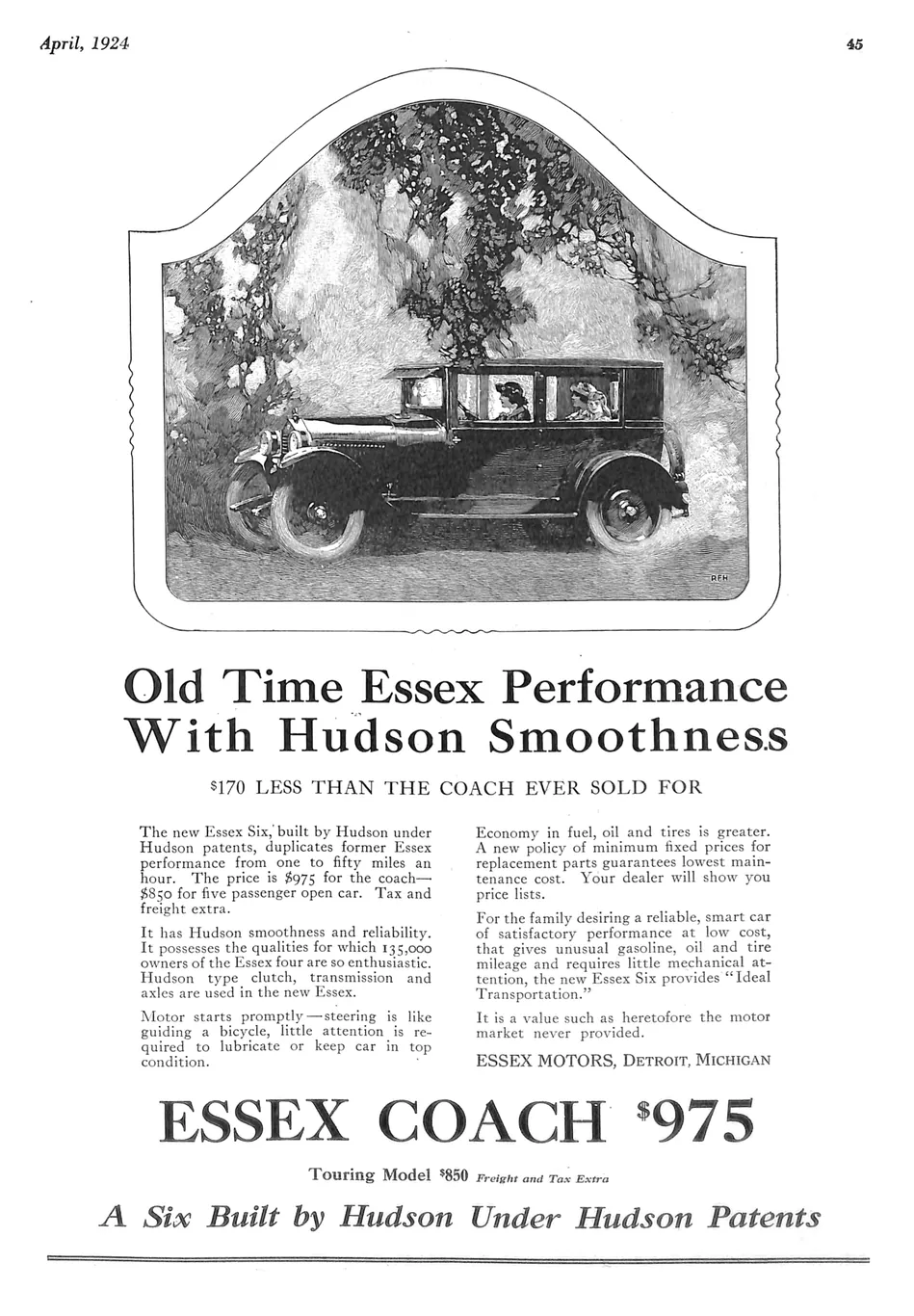

Then 1929 ended. What does a company built to make 300,000 cars do when the customers stop coming?
The Depression, the Terraplane and Amelia Earhart
In 1930 Hudson cancelled the contract with the Massachusetts coachbuilder that made its finest bodies; freight from Massachusetts had become a luxury.62 In 1931 it advertised. Watch Hudson, said the posters.63 People watched. Fewer bought.
Chapin’s answer was a cheap car with a big name. On 21 July 1932, beside the factory, he launched it in front of more than 2,000 dealers from 40 states.6465 It was called the Terraplane. Amelia Earhart christened it.66 She had flown the Atlantic alone that spring, the first woman to do it, and her face was on every front page in the country.67 Hudson understood what fame was for. It is for standing next to.
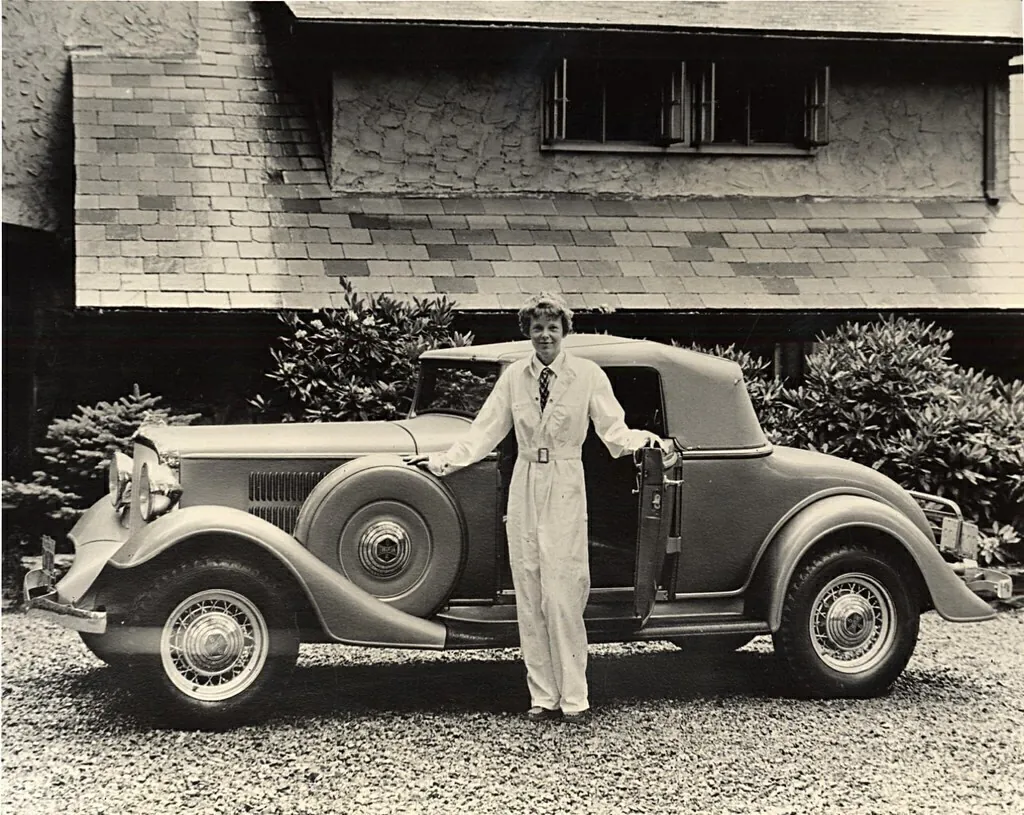
Every dealer drove a Terraplane home, 2,000 demonstrators on the roads of 40 states.68 One of the first cars off the line went to Orville Wright, who had some standing in the matter of things that go fast.69 Four days after the launch Hudson took a full page in the New York Times for it.70
The Terraplane started at $425.71 Its six-cylinder engine made 70 horsepower; Ford’s new V8 made 65.72 As one account has it, Rolls-Royce bought one the next year to see how it was done.73
Eighteen days after the launch, the President made Chapin Secretary of Commerce.74 Commerce, in August 1932, was a department in charge of something that had stopped. He served seven months.75 Then the country changed presidents, and in 1933 Chapin went back to Hudson and to the job of keeping it alive.76

By 1934 the Essex name was gone and the Terraplane carried the cheap end of the business on its own.77 That year Hudson built nearly 86,000 cars, a little over a quarter of what it had built in 1929.7879
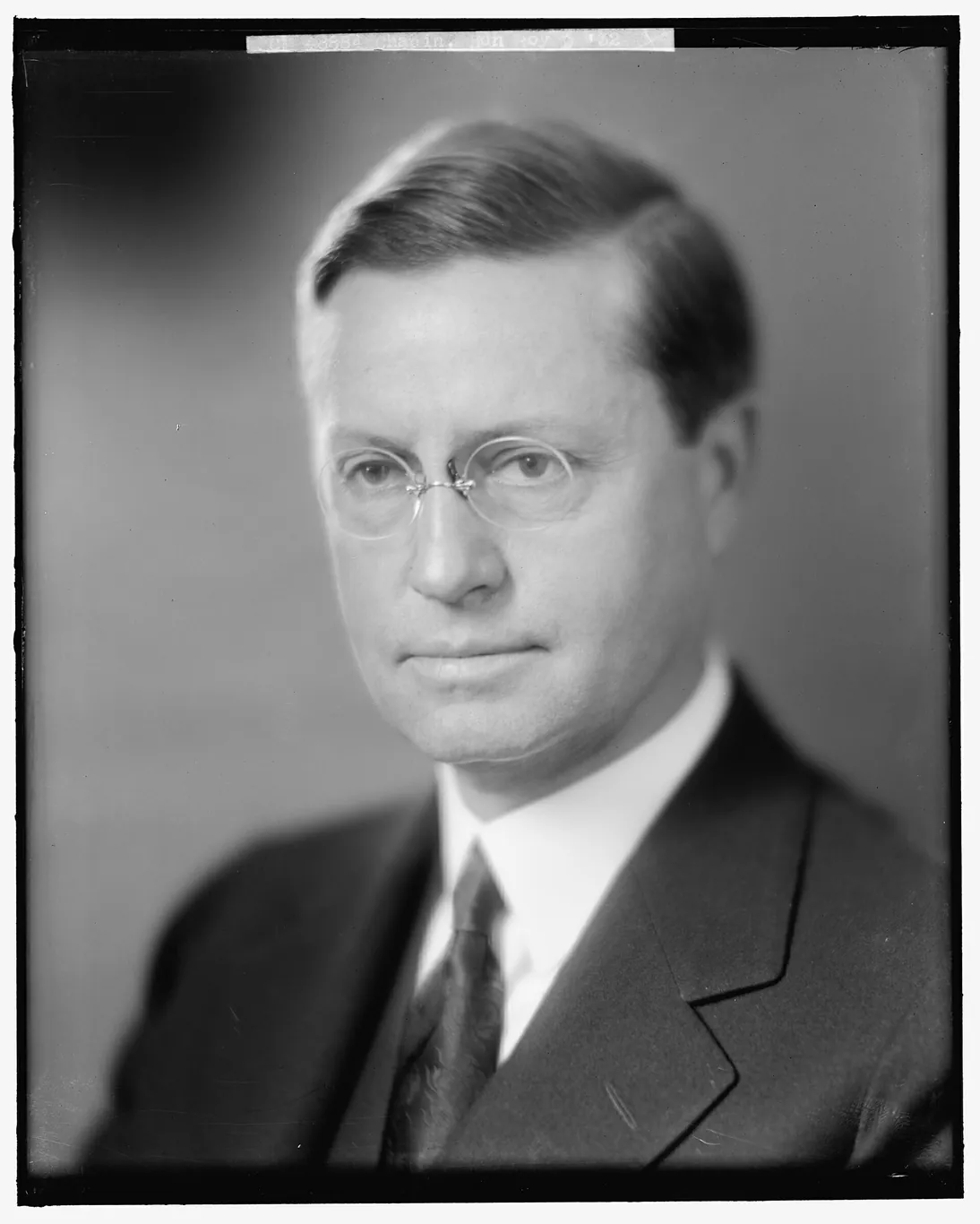
Roy Chapin died in Detroit on 16 February 1936, aged 55, still president of the company he had started with a department store’s money.80 The board chose A. E. Barit, who had arrived more than 25 years earlier to take dictation and had spent his career in purchasing.8182 A purchasing man knows what every part costs, to the cent. Whether he knows what a car is worth is another question, and Hudson would spend the next twenty years answering it.

His first year brought strikes and a sit-down in the body plant, and in 1937 Hudson recognised the union, so from then on every part had a price and so did every hour.8384 Could a man who had spent his life pricing parts build a car?
The 1941 step-down drawing and Hudson’s war work
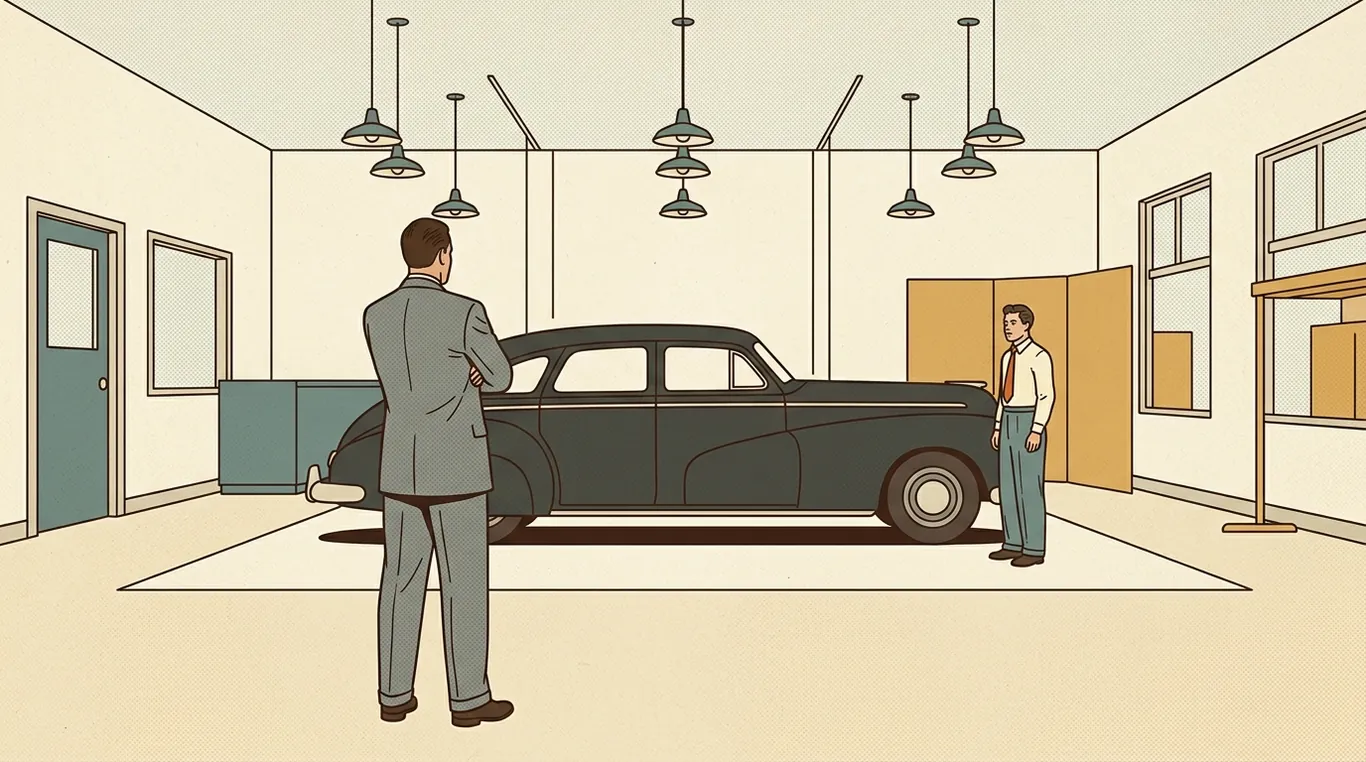
In 1941 the company’s chief designer drew a car with its floor in the wrong place.85 Almost every American car sat on its frame: a body bolted on top of two steel rails, like a box on a ladder.86 He hung the floor between the rails.87 The car came out lower, wider and stiffer, and the people inside sat down inside the steel.
A prototype was built.88 Barit looked at it and did not like it.89 Too low, too rakish, as the accounts have it.90 Then the war put the whole argument in a drawer.
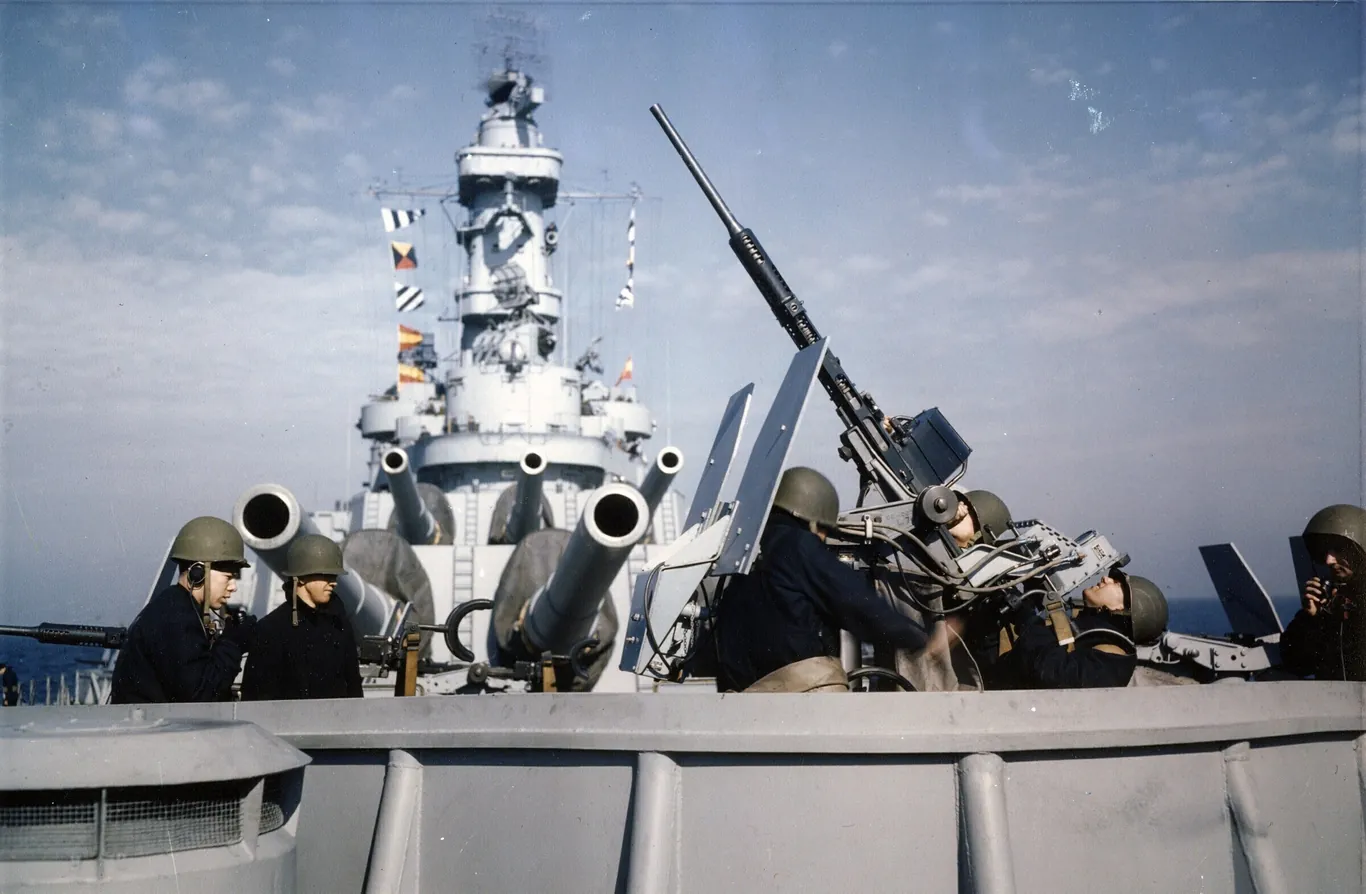
Hudson had lost money in 1940.91 The war fixed that. In May 1941 the Navy contracted it to make guns: 20-millimetre anti-aircraft cannon, 33,000 of them in the end, in a new plant north of the city that the Navy paid for.929394 There is no better customer than one who builds you the factory.
In the fall of 1943, with output at its peak, the Navy ended the contract and gave the work to Westinghouse, and no reason has come down.95 The engines for landing craft, 4,000 of them, and the bomber parts ran on, and over the war Hudson earned nearly $2 million a year.9697

Decision 1: Barit refuses the Fisher brothers’ money, 1945
The war in Europe ended, and a few weeks later, in late May 1945, Hudson’s shareholders met.98 Barit is at the front of the room. He is 54, and has run the company for nine years.99 He reads out an offer.
The Fisher brothers, the family whose name was on every General Motors body, will put $8.5 million into Hudson for 400,000 new shares.100101 The Fishers are offering what the company’s own books say the shares are worth, and on the stock market the shares are trading higher.102
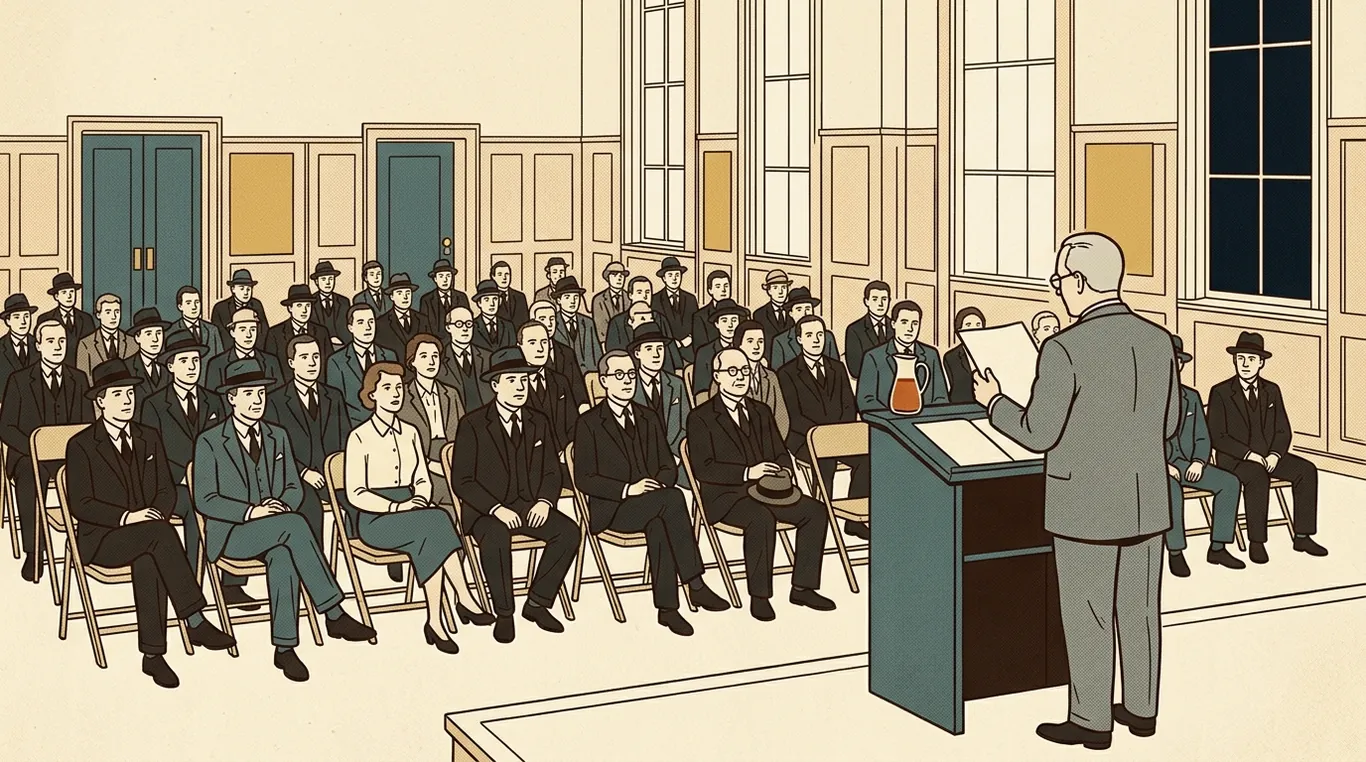
Barit could take the money and give up a share of the company. He tells the room it undervalues Hudson, and Hudson stays on its own.103 Then he is accused, from the floor, of having already refused the same offer six months earlier, without telling his own directors.104 Barit answers that the Fishers had pressured him to sell.105 Time printed the row under the heading Sound and Fury.106
What the refusal cost cannot be read in 1945. It can be read nine years later.
Decision 2: Barit approves the step-down Hudson, 1945
That fall, with car work starting again, the designer took the drawing out of the drawer and tried Barit a second time.107 Barit could have built the old car for a few more years and banked the war money. This time he said yes, and through 1946 the car was drawn for real.108
He had, for once, something to spend. He would spend $18 million retooling for one car, more than the war had earned the company, and twice what he had sent the Fishers away with in May.9109 While the new car was drawn, Hudson built its pre-war car, 93,000 of them in 1946, and sold every one.110
A department store changes its windows every season. Barit was about to build one window and bolt it to the wall.
The 1948 Hudson step-down and Tom McCahill’s road tests
Was the car any good? Yes.
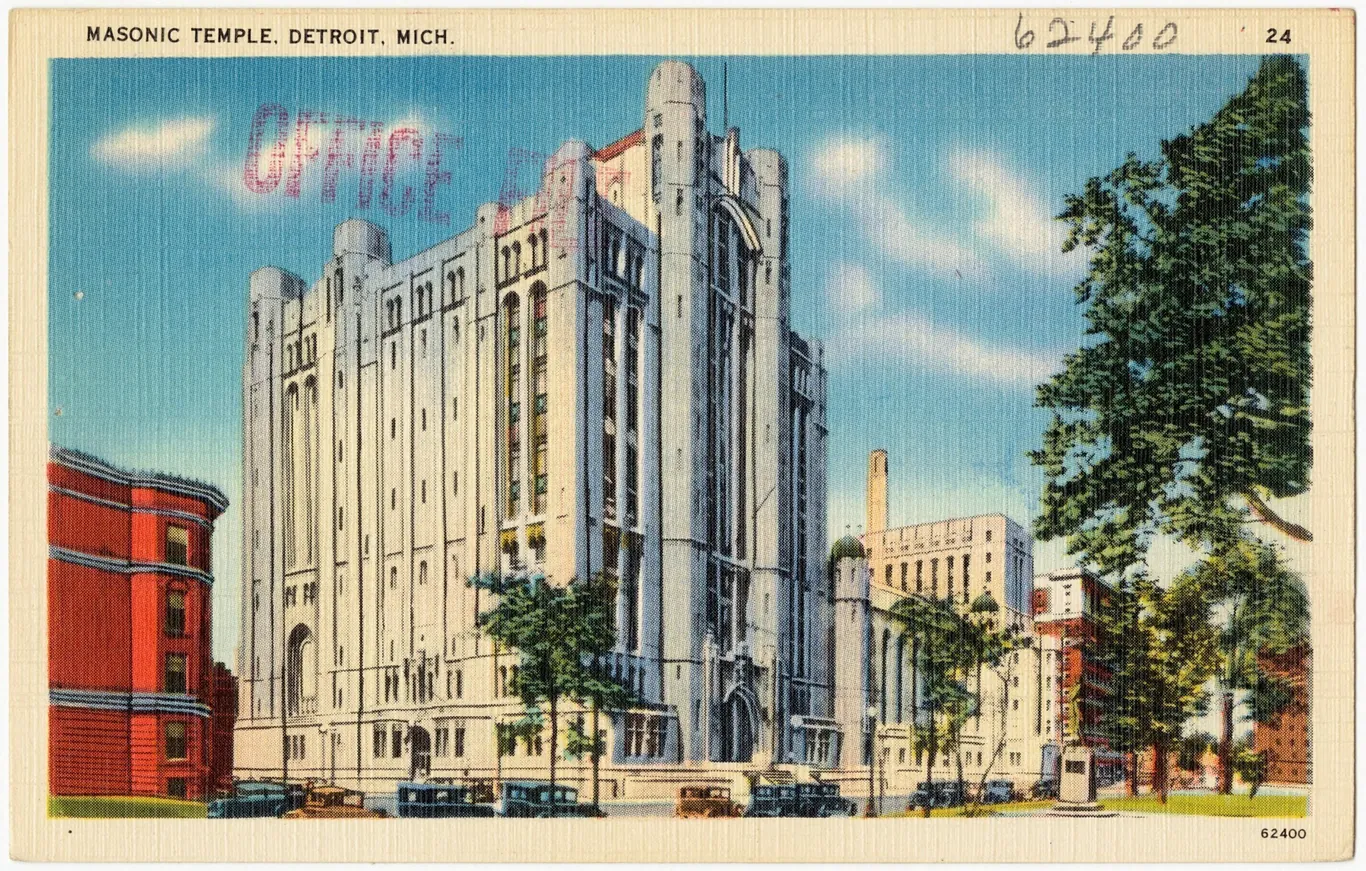
The first bodies went down the line at Jefferson Avenue on 12 October 1947.111 The public saw the car in December 1947, at the Masonic Temple in Detroit and then in showrooms across the country.112

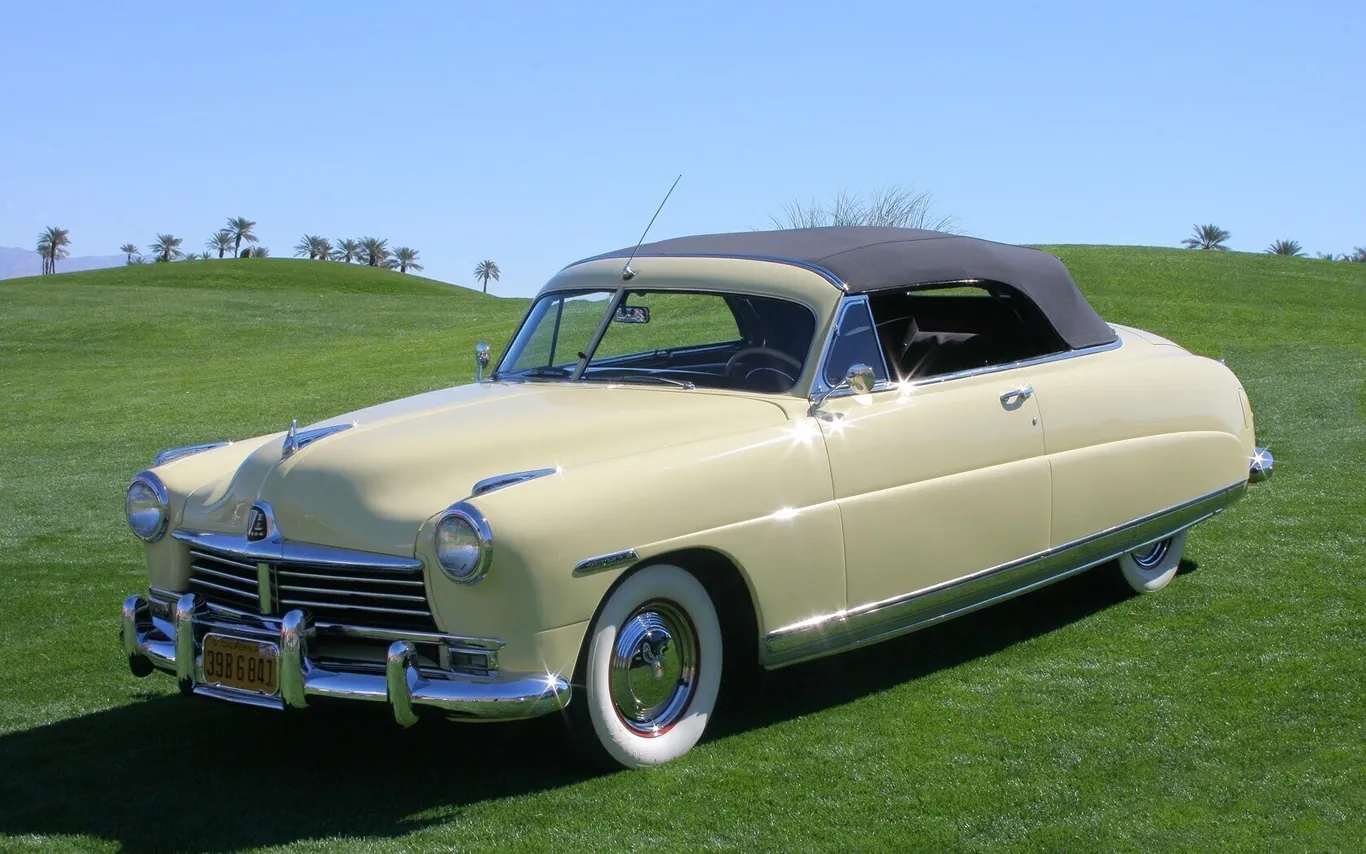
Hudson called the construction Monobilt: body and frame welded into one steel shell, no bolts between them.113 The car was about 300 pounds lighter than a Buick or a Chrysler for it.114 Unit bodies had been built before; the floor hung below the frame rails was Hudson’s own, and Hudson patented it.115116
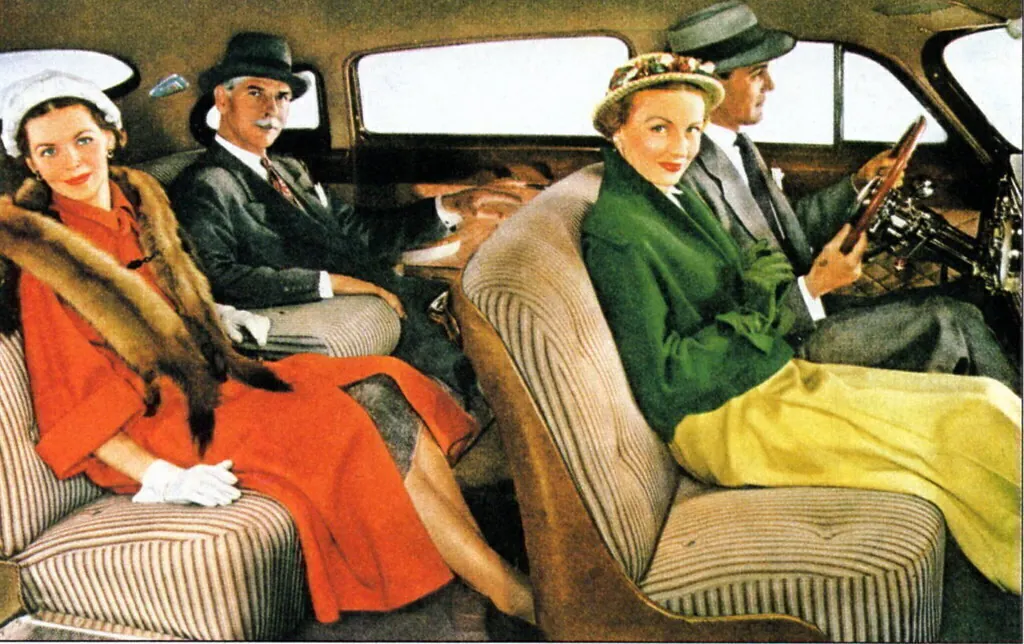
Time put the whole idea in one picture. Passengers, it said, step over the frame and down into it from the curb.117 Hence the name everyone used: the step-down. It stood 60 inches high, about five inches lower than its rivals.118 Time reported more headroom and more width inside than any other mass-produced car, and a lower centre of gravity.119
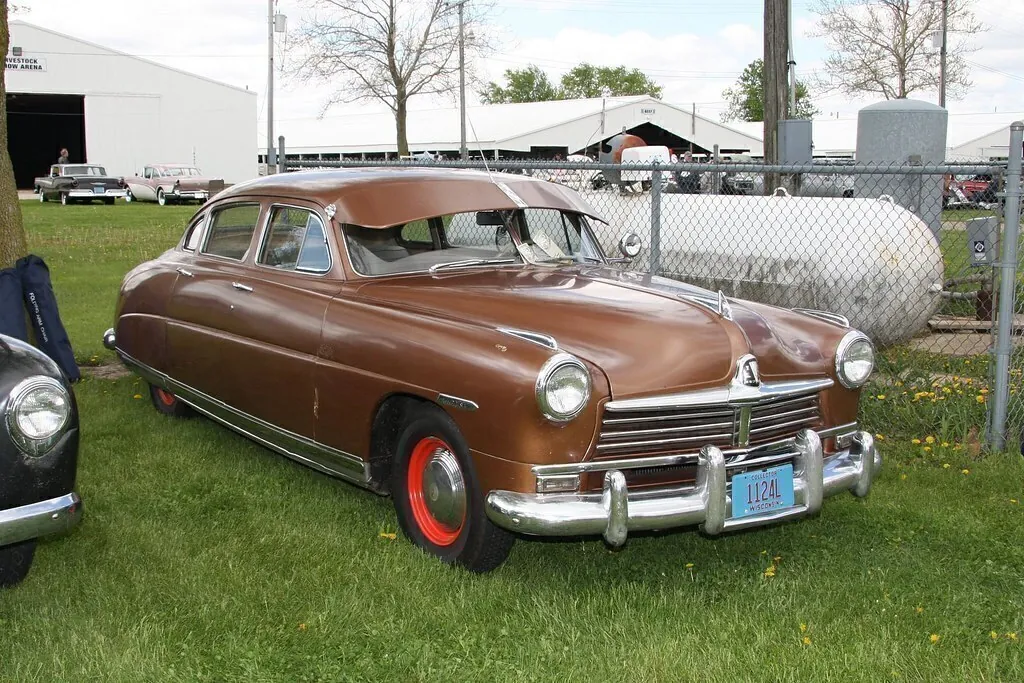
Tom McCahill tested cars for Mechanix Illustrated.120 He drove a new eight-cylinder Hudson that winter, mostly in deep snow, with fewer than 200 miles on the clock, and published in March 1948.121122 No car in its price class, he wrote, had ever offered so much luxury, and none was better value.123
Two years later McCahill took a six-cylinder Hudson and ran it to 103 miles an hour, with his editor in the back seat photographing the speedometer.124 He took a bend at 92.125 A new Ford that came along to race it lost every sprint.126 On the cow path across his hunting fields the low car scraped the ground, he said, like a road grader, which he allowed was not most people’s driving.127 It was, by his measure, the lowest car on the American market, with the widest seats.128

And it sold, at home and abroad. One stood on a stand in Amsterdam in April 1948, under its own sign, the lowest thing in the hall.129 By the spring of 1948 the Detroit plant was building 600 cars a day and aiming at a thousand.130 It got the steel by leasing a government mill, 5,000 extra tons a month, which is the kind of thing Barit was good at.131
In 1947, still on the old car, Hudson had doubled its profit.132 By one count it sold more cars in 1948 than in any year since 1929.133 In 1949 it built about 159,000, its best year since the war, with the cheapest model starting at a little over $2,000.134135 By the reckoning of a man who sold its cars, Hudson broke even at about 75,000 a year.136 It was building twice that.
Time found Barit, a shy man by its account, beaming with good news, and reported that the extra steel would take the plant to a thousand cars a day.137 Purchasing men do not beam as a rule. The question from the floor in 1945 was, for the moment, answered.
Which leaves the real question. If the car was that good, why could Hudson not sell it for long?
The Fabulous Hudson Hornet and Marshall Teague in NASCAR
In 1951 Hudson put a bigger engine in the step-down and called the car the Hornet.138 It had 308 cubic inches, six cylinders and 145 horsepower, in a body built like a bridge.139 Hudson had built a racing car by accident, and priced it with its most expensive cars, from about $2,500.140
A service-station owner from Daytona Beach called Marshall Teague noticed.141 He drove to Michigan, walked into the Hudson plant without an appointment, and by the end of the visit had a promise of cars and factory support.142143 It is generally called the first stock-car team Detroit ever backed.144 Nobody has recorded which executive he met. Whoever it was deserves a small plaque, because the next four seasons were the best advertising Hudson ever had, and it did not pay for most of it. Hudson paid Teague $1,000 a month, lent him an engineer, and let him keep whatever he won.145
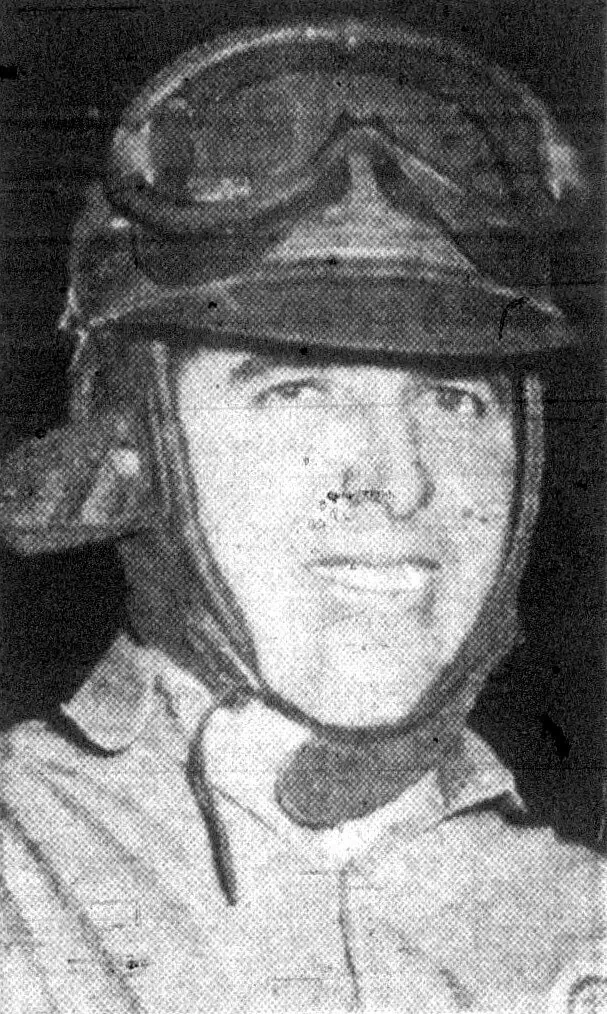

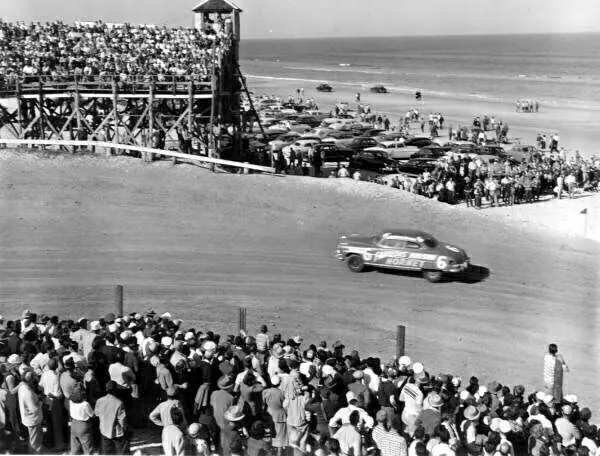
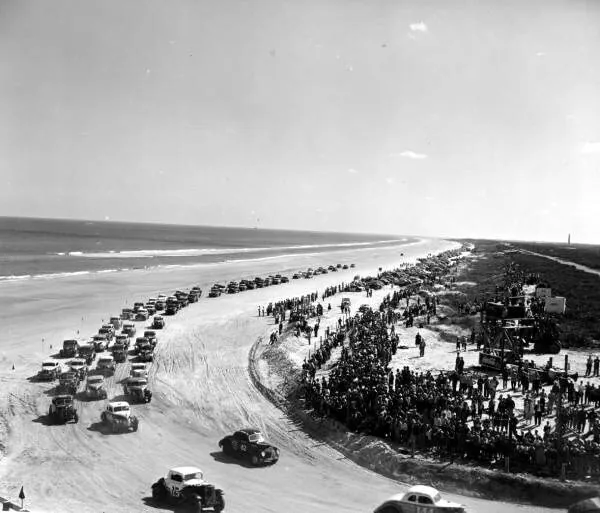
The sand again. Thirty-five years after the Super Six ran its mile on Daytona Beach, a Hudson was back on it. On 11 February 1951 Teague won the Daytona beach-and-road race in a Hornet numbered six, from 54 starters, with a Lincoln second.146 That season Hudsons won a dozen NASCAR races, and the driver who took the NASCAR championship had switched to a Hudson halfway through the year.147148

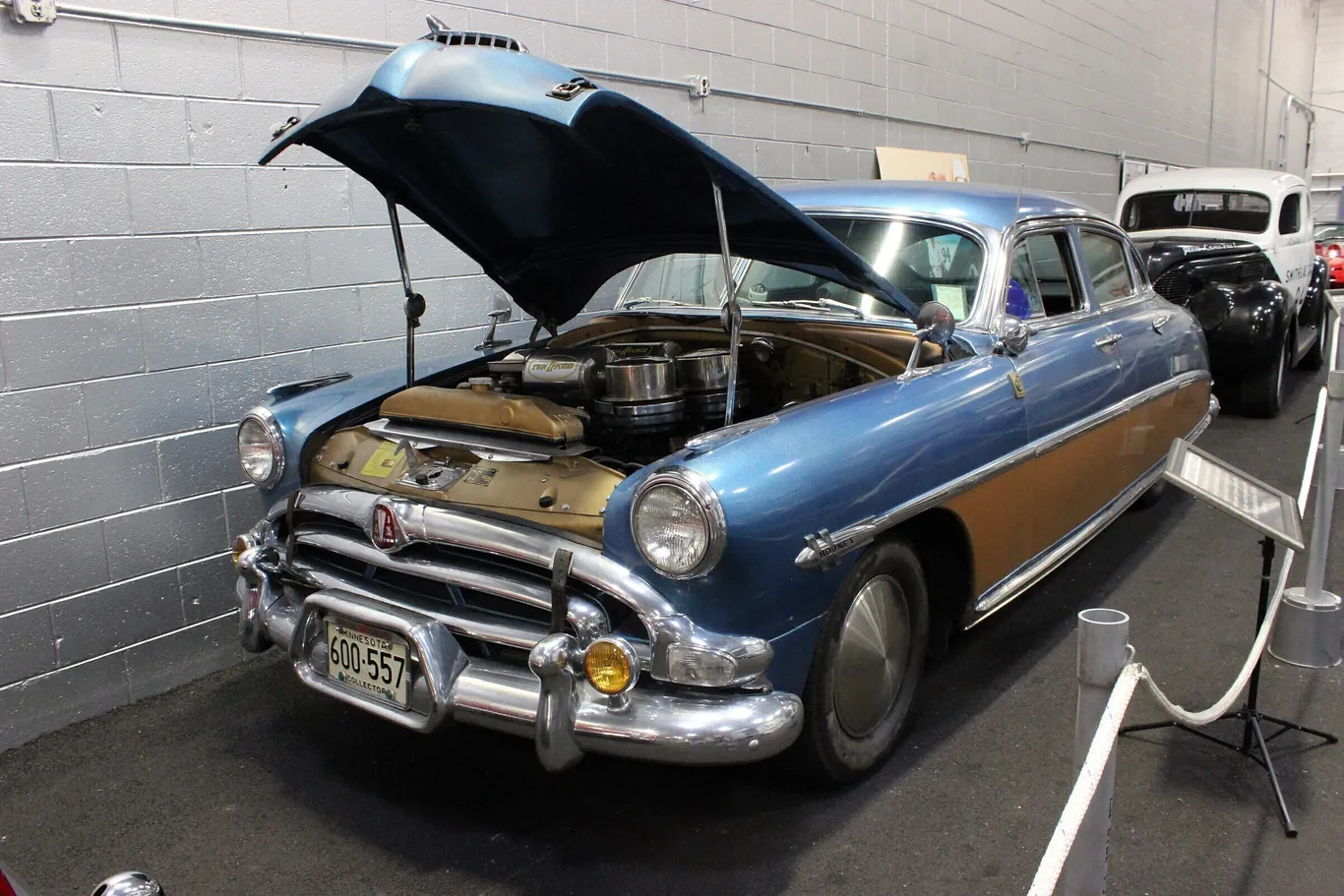
In the middle of 1951 the factory offered a second carburettor for $85.60.149 It called the pair Twin H-Power, which sounds like a breakfast cereal. The next year it was standard.150
In 1952 NASCAR ran 34 races in its top series.151 Hudson won 27 of them.152 Eight different drivers won in Hudsons that year, and the champion drove one.153 Hudson painted the word Fabulous down the sides of the cars and bought pages in Life to say so, and a company that had spent forty years selling comfort to men who had done well was suddenly the fastest thing in the South.154

In 1953 Hudson won 22 of 37, and in 1954 seventeen; the same driver won twelve races in each of those years.155156 Teague himself raced mostly in the older AAA series, where he won twelve of thirteen races in 1952 and was champion that year and again in 1954.157
Here is the number nobody at Hudson put in an advertisement. Hornet output fell in every year Hudson dominated the sport: about 44,000 in 1951, the first racing year;158 about 36,000 in 1952, the year of 27 wins;159 about 27,000 in 1953;160 and about 25,000 in 1954.161 The factory did not stop: in 1953 and 1954 it was still selling 200-horsepower engines over the counter to anyone who would race them.162
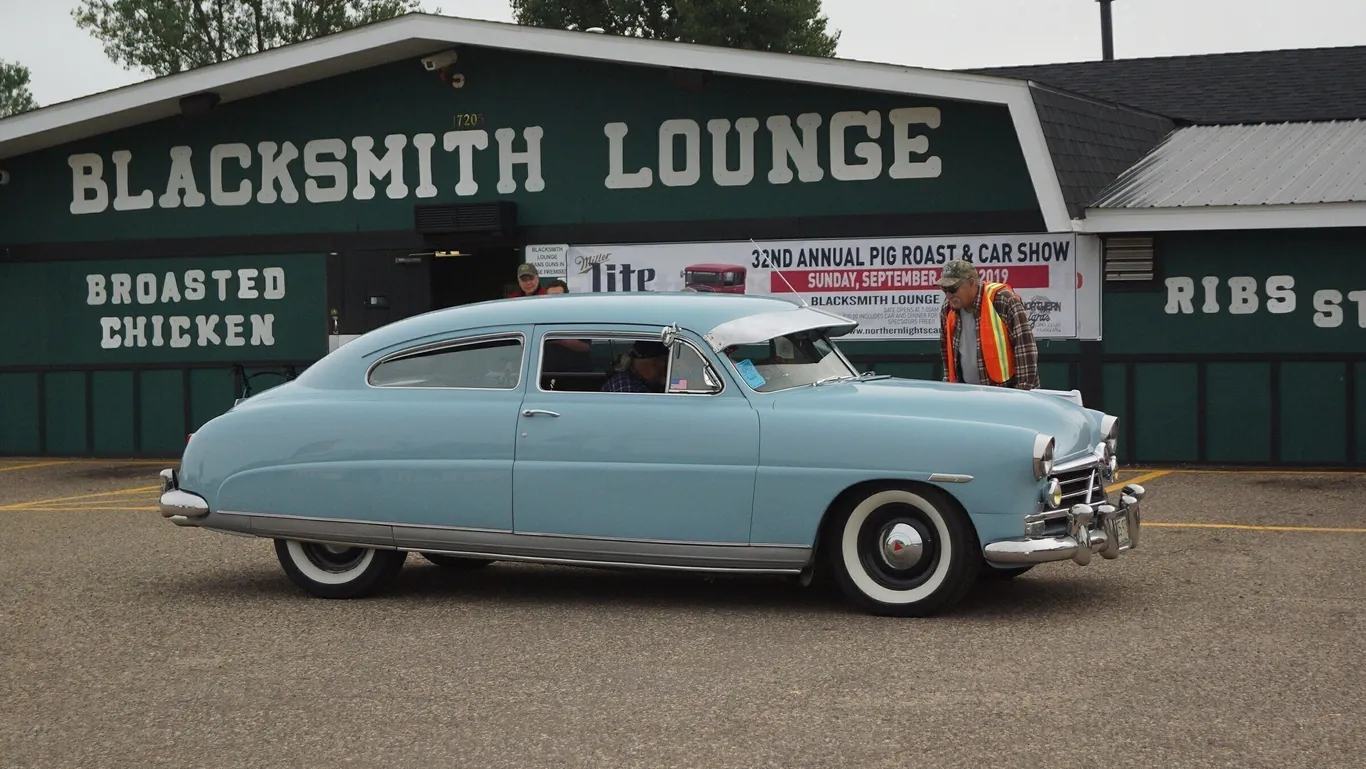

Across the whole company, sales fell sharply in 1952, to about 70,000 cars, below the break-even line in the year of 27 wins.163164 The men in the grandstand loved the car. They went home and bought something else.
If you have watched a children’s film about racing cars with a grandchild, the old doctor in it was a Hudson Hornet.165 He was retired, and nobody in the town remembered what he had been.166 That was about right.
So what had the buyers seen in the showroom?
Why Hudson could not restyle the step-down or build a V8
They had seen the same car. The advertisements for 1949, 1950, 1951, 1952 and 1953 show a different year, a different slogan and the same shape.
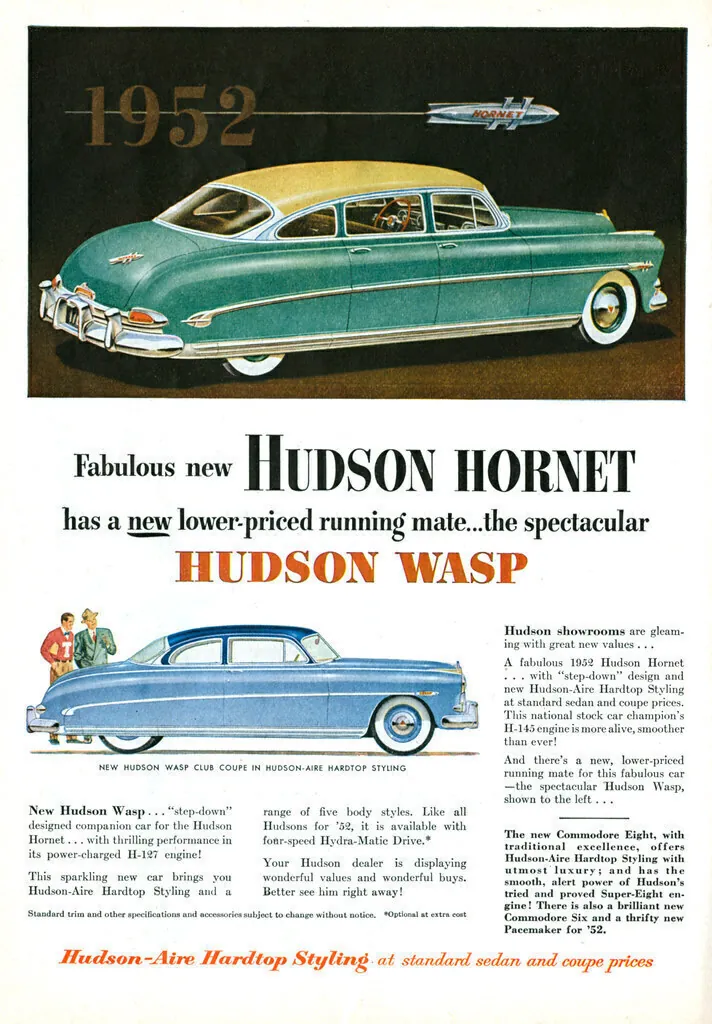
General Motors could give a Chevrolet new trim every fall and a new body every few years for the price of some new presses, because the body and the frame were separate pieces.167 In a Hudson they were one piece, so to restyle the car you had to re-engineer the car, and Hudson did not have another $18 million.168 Even the rear wheels sat inside the body, tucked under the skirts, which looked wonderful in 1948 and cost money to build in every year after.169
So the designers did what they could: new grilles, new chrome, new tail lamps, and for 1954 a bigger facelift, as much as the money allowed.170 In 1949, the best post-war year, the cheapest model had been more than half of everything Hudson sold, so it was the body people were paying for, and the body was the thing that could not cheaply change.171 In 1950 Hudson sold about 121,000 cars.172 In 1953 it sold 66,000.173
Meanwhile the engines changed. For 1949 Cadillac and Oldsmobile brought out new overhead-valve V8s.174 Chrysler followed in 1951.175 By 1955 every other maker of any size had built one or bought one.176
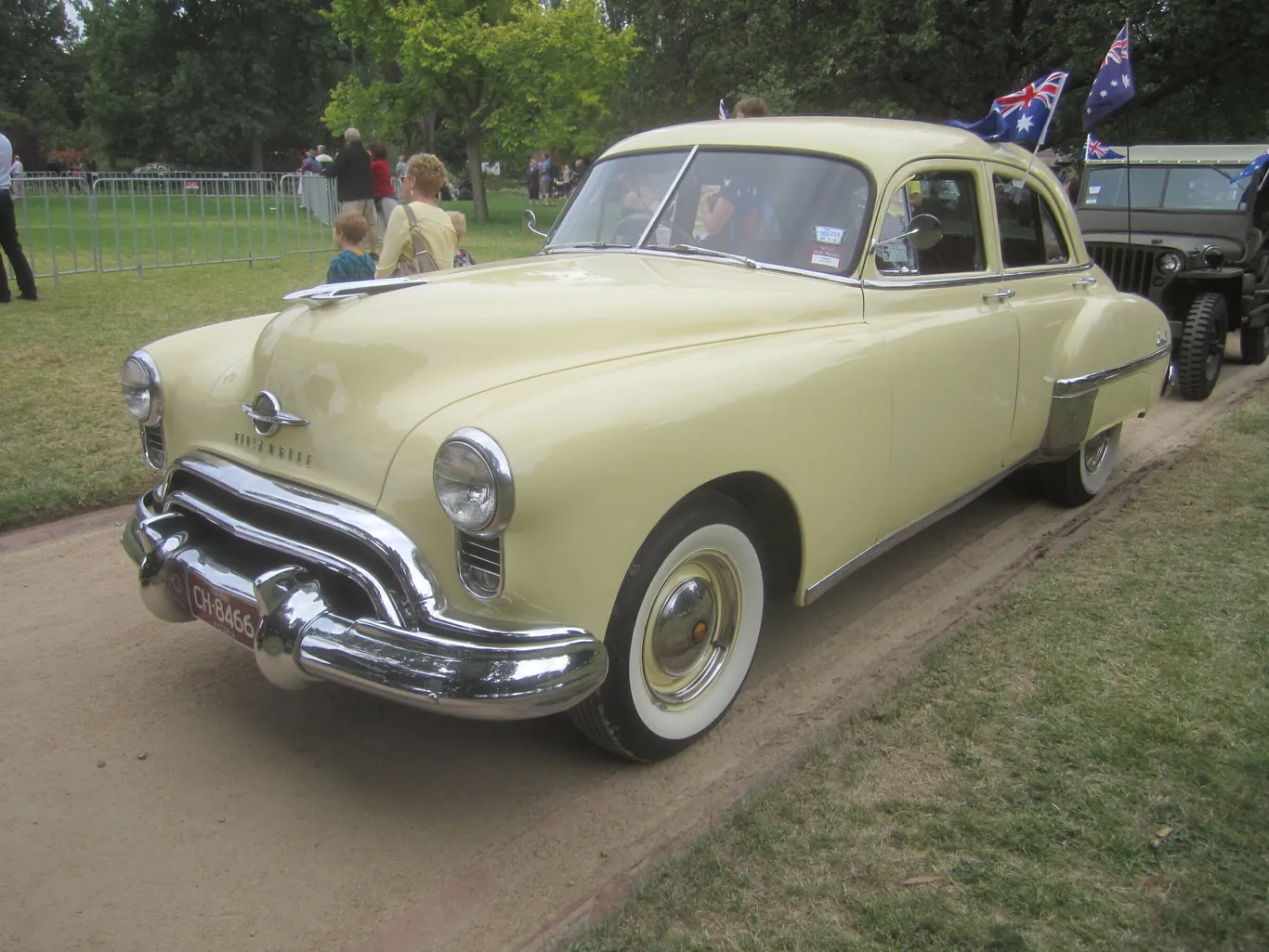

Hudson’s six was a side-valve engine, superb at what it did.177 Its racing shops could get about 210 horsepower out of it, and would sell you that engine over the dealer’s counter.178 The showroom car got 170, while mid-priced V8s were passing 220.179
A man buying a car in 1953 wanted a V8 the way a man in 1922 had wanted a roof. Essex is credited with teaching the country to want the roof. Hudson could not afford to teach itself the engine. In 48 years it never built a V8 of its own.180
The company lost money in 1951.181 By one account it showed a profit in 1952 only because the Korean War had sent it defence contracts.182 Barit had a plant built for 300,000 cars a year, making 70,000, and some money left from the good years, though nowhere near another $18 million.183 Every dealer in the country was telling him what to do with it.
What did Barit do with the money he had left?
The Hudson Jet against the Nash Rambler
He built a small car. The idea was sound. Nash was selling a small car called the Rambler, and Hudson’s dealers had nothing to put against it.184
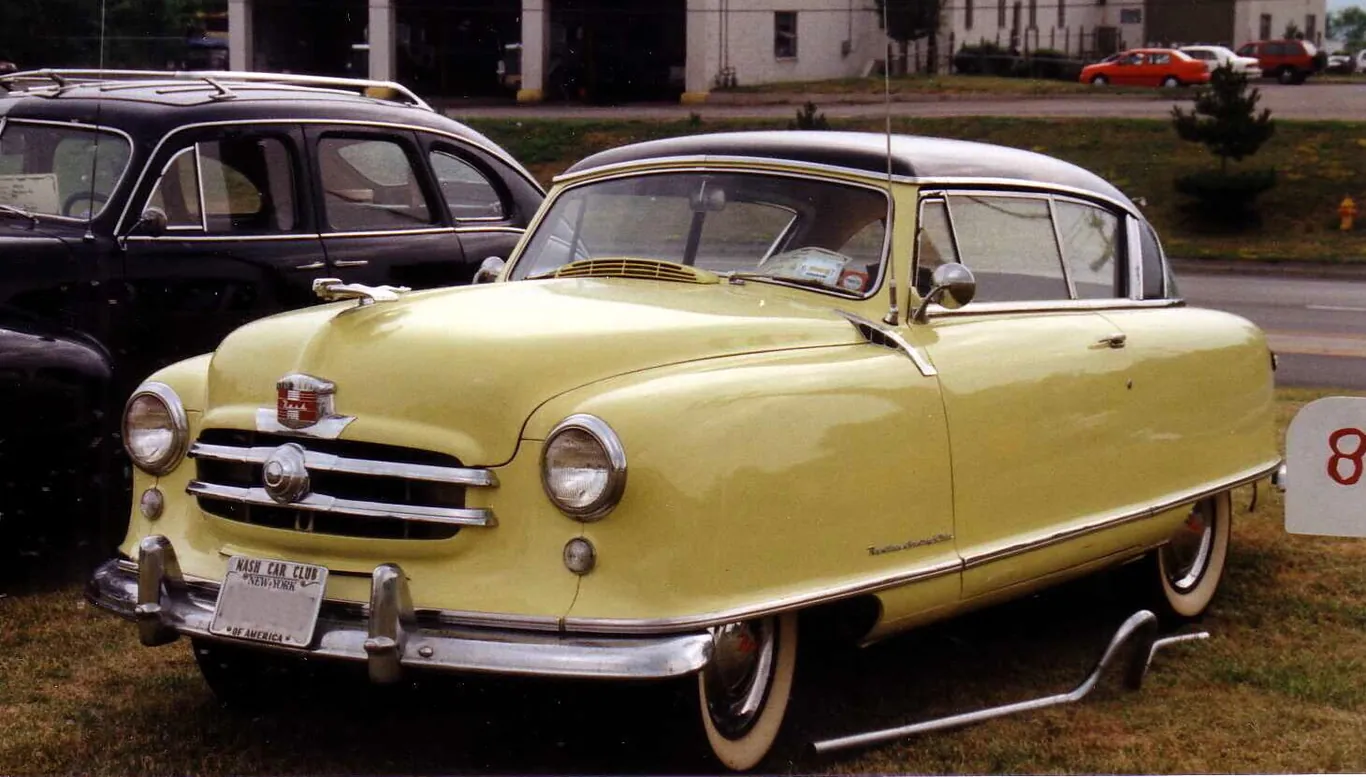

The company’s chief designer wanted something low and sporting, on the lines of a small Italian sedan.185 Barit wanted something else. He insisted, by the accounts that survive, on seats as high as a dining chair and a roof tall enough to wear a hat under.186 The man who had sold America the lowest car on the road now wanted a tall one.
In 1945 the designer had talked him round. This time the designer lost. Then, as the story goes, the biggest Hudson dealer in the country, a man in Chicago who sold one Hudson in twenty, told Barit what the car should look like, a Ford roof, a wraparound rear window, Oldsmobile tail lamps, and got his way.187 So the sporting little car came out tall, square and borrowed, and the designer, by one account, was deeply disappointed.188 It was called the Jet.
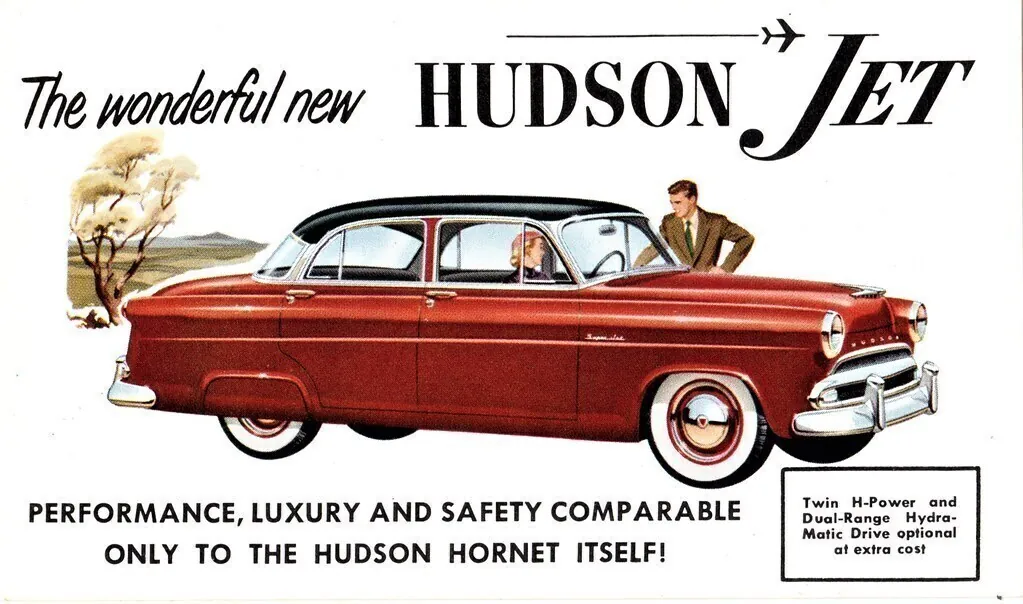
Decision 3: the Hudson Jet instead of a V8, 1952
Barit could have put the last of the reserves into an engine for the car people already liked, or into a new big body; he put it into the Jet. The money went in through 1951 and 1952, most of what Hudson had.189 It cost Hudson somewhere between $10 million and $16 million to develop, depending on who is counting.190
The Jet went on sale at the end of 1952 at $1,858.191 A full-size 1953 Chevrolet was $1,613, and a full-size Ford $1,734.192 An automatic gearbox was $176 more.193 Hudson was asking a man to pay more for less car, on the strength of a roof he could wear his hat under. Americans in 1953 were taking their hats off.
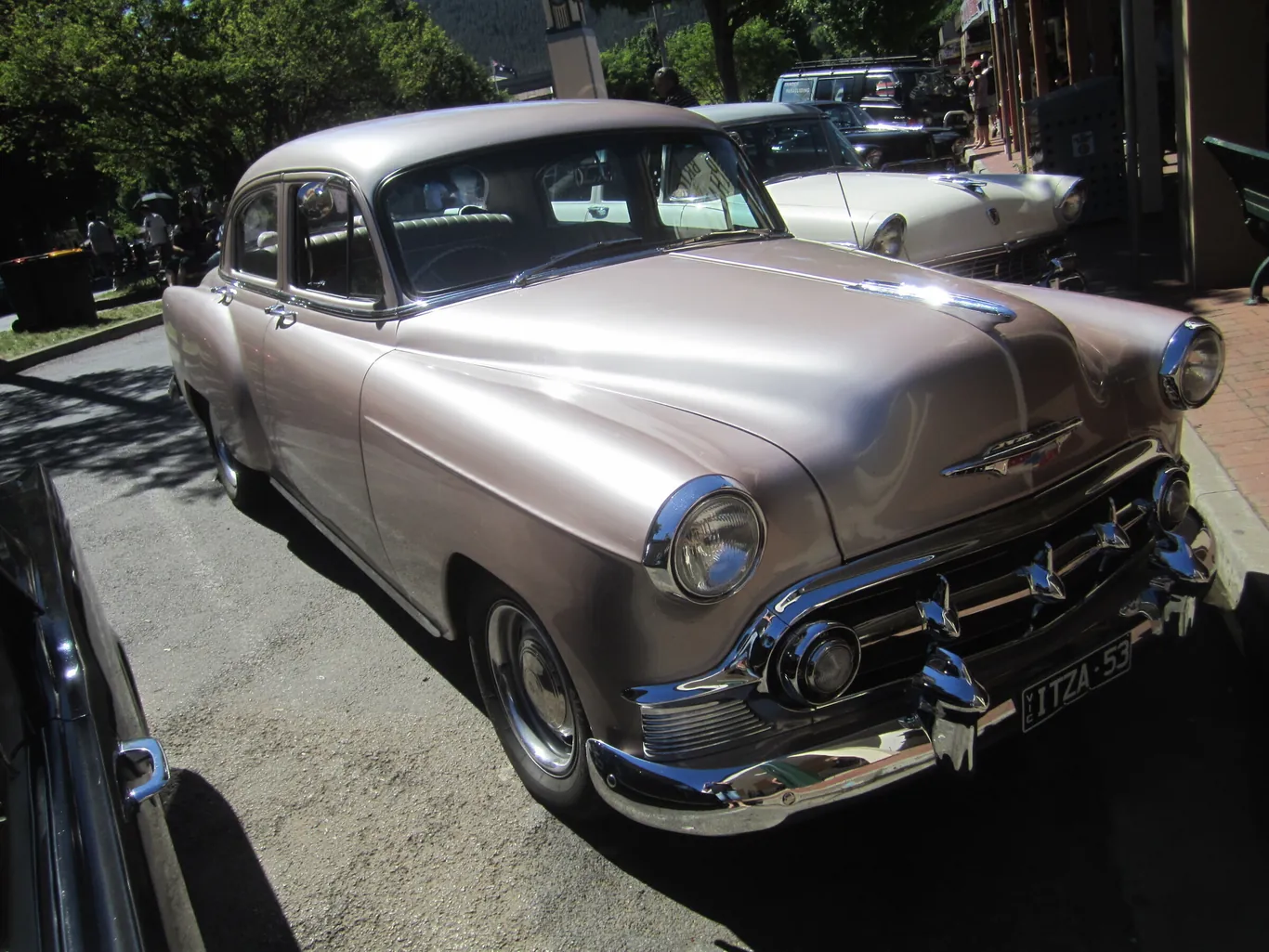

In 1953 Hudson sold about 21,000 Jets.194 Nash sold about 32,000 Ramblers.195 The Jet was a third of everything Hudson built that year.196 The next year it sold about 14,000, more than a quarter of a shrinking total, and Hudson, with no new big car and no V8, had nothing else coming.197
In March 1954 the company reported its result for 1953: a loss of $10,411,000, against a profit of $8 million the year before.198199
With the money gone, who would take Hudson?
George Mason’s plan to merge Nash, Hudson, Studebaker and Packard
There was a man across town who had been waiting for this since 1946. George Mason of Nash believed the independent car makers had one chance against General Motors, Ford and Chrysler, and that was to stop being independent.200 One company out of four: Nash, Hudson, Studebaker, Packard, under one roof.201

He had put the idea to Barit in 1952, and Barit had said no.202 He put it again, and Barit said no again.203 A man who had refused the Fishers with the company solvent was never going to say yes to Nash while Hudson still had money.
In November 1953 the talks became public.204 In January 1954 the money was gone.
Decision 4: Barit signs Hudson over to Nash, 1954
Barit could have refused Nash a third time and run Hudson down on its own. On 14 January 1954 he signed Hudson over to Nash for paper: three Hudson shares became two in the new company, one Nash share became one, and Nash’s men ran it from the first day.205206207 It was presented as a merger, and one account says that was to keep Hudson’s dealers calm.208
The question from the floor in 1945 had its answer.
On 1 May 1954 American Motors came into being.209 Three men posed for the photograph.210 Mason, who ran it. Barit, who got a seat on the board and the title of consultant, which in Detroit is what you call a man you no longer need.211 And Mason’s number two, George Romney.212 Studebaker and Packard never joined; the man who ran Packard wanted to be the one in charge, and that year Packard bought Studebaker instead.213
The great plant on Jefferson Avenue built its last Hudsons in the fall of 1954.214 The last cars were loaded for shipment at the end of December.215 The whole operation, as the union’s own records put it, moved to Kenosha and Milwaukee.216 Most of the men who had built the step-down in Detroit were laid off; some were offered Wisconsin, and the union local that had sat down in 1937 began to empty out.217218
George Romney, the Hudson “Hash” and the Packard V8
Back in Detroit, on 8 October 1954, five months into the merger, Mason died.219 He was 63.220 Within two weeks the board made Romney, 47, president.221 One of his first public statements was that there were no more mergers coming.222 The four-company plan died with Mason, and Romney had ideas of his own.
What would he keep?
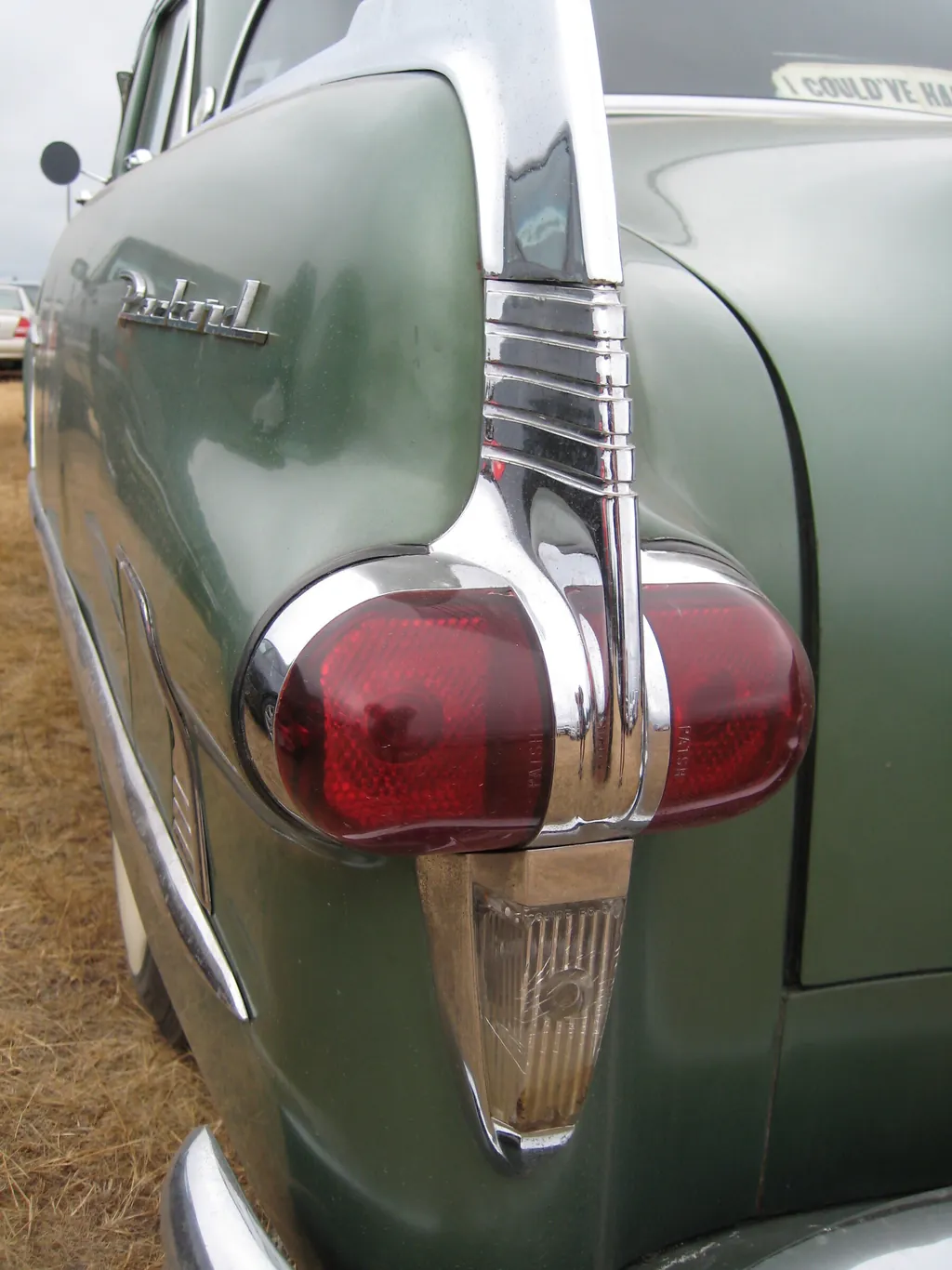
On 1 November 1954 Romney told the newsreel cameras that for 1955 Hudson and Nash would share one basic body, as Buick shared with Oldsmobile.223 What that meant at Kenosha was a Nash body with Hudson sheet metal and trim on it.224 The loyalists had a name for it. They called it the Hash.225
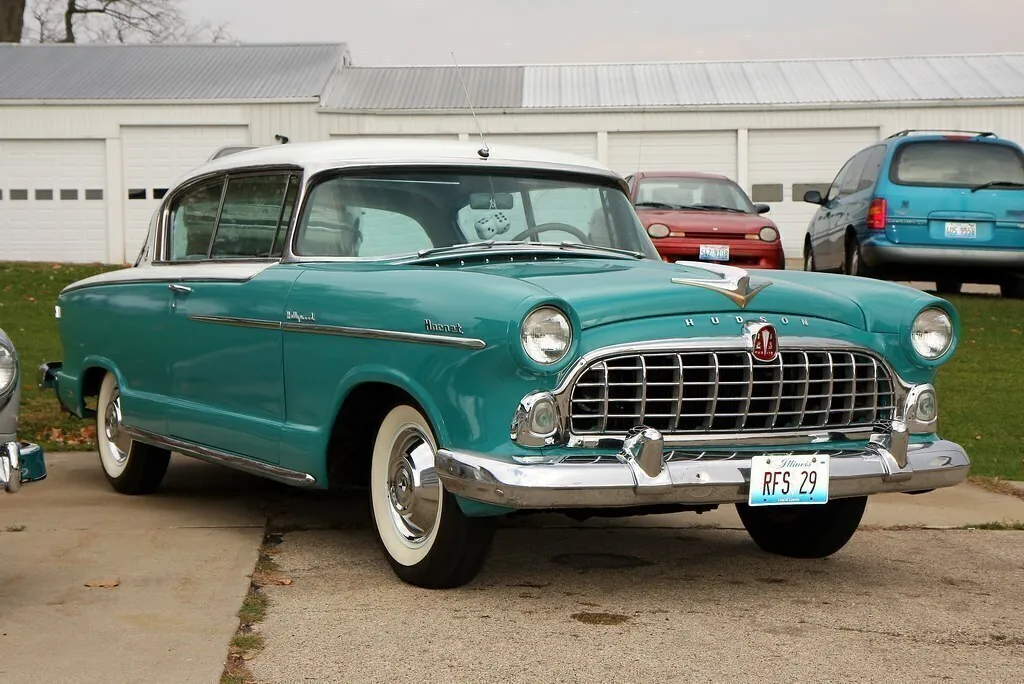
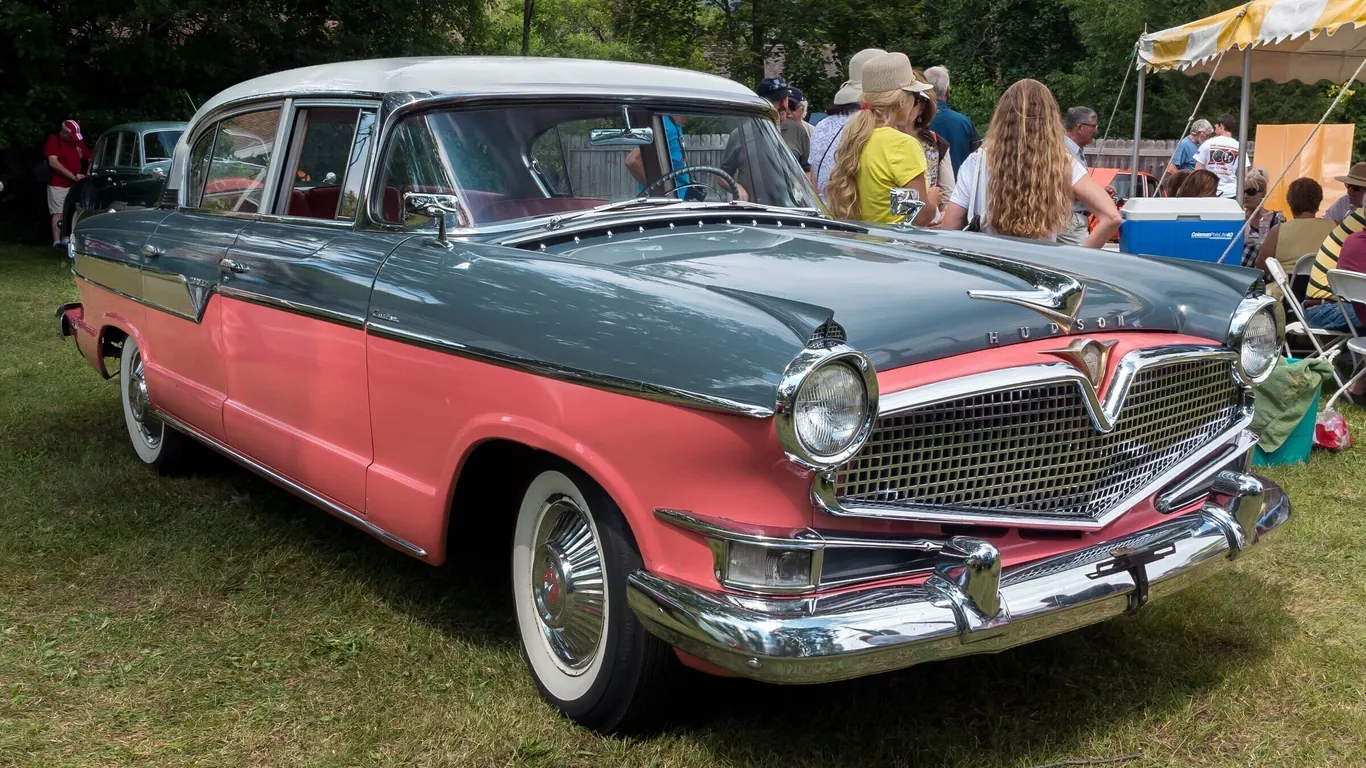
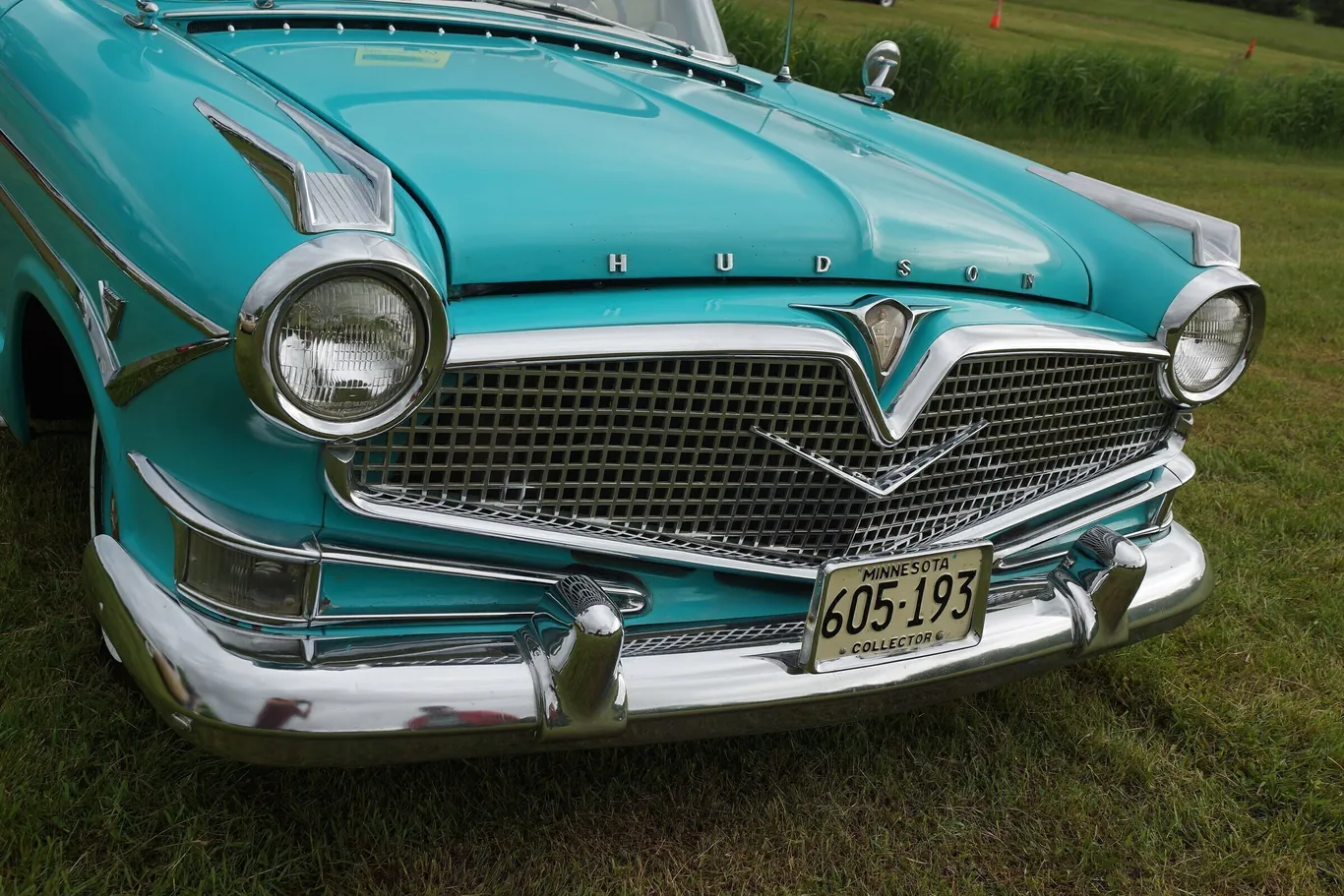
The 1955 Hudson had a V8 at last, bought in from Packard, 320 cubic inches of someone else’s engine.226 About 20,000 full-size Hudsons were sold that year.227 In 1956 the Hash got a new face, a great V of chrome across the front, drawn in American Motors’ studio, and the same chassis under it.228 About 10,000 full-size Hudsons were built that year.229

Romney’s bet was the Rambler, the small car that had beaten the Jet. The Rambler would sell more than 91,000 cars in 1957, more than the whole of Hudson had sold in any year since the Hornet’s first.230
Decision 5: the Hudson name is dropped, and the last Hudson, 1957
Romney could have kept Hudson as a badge on the Rambler, as it had been since 1955. In November 1956 he and his board decided that after 1957 there would be no Hudson and no Nash.231 This one was Romney’s.
Within weeks Barit, 66, resigned from the board, in protest by the accounts that survive.232 He had joined the company within a year of its first car and run it for eighteen years; he lived another seventeen and never ran a car company again.233
On 25 June 1957 the last Hudson left the line at Kenosha, a Hornet, one of about 4,100 that year.234 Under its hood was a V8 of American Motors’ own, 255 horsepower, the engine the step-down never got.235236

That is where the name ends, and it is worth setting out, in order, what put it there.
The five decisions, AMC, Jeep and what is left of Hudson in Detroit
Five choices, then, and what each one cost.
In 1945 Barit sent the Fishers away, and with them the only outside money on the record. That fall he said yes to the low car, and $18 million bought a shape Hudson would wear until Detroit closed. In 1952 he chose the Jet over an engine, and the Jet took the reserves and gave back a $10 million loss. In 1954 he signed, and his signature moved Hudson out of Detroit within the year. And in 1956 Romney chose the Rambler, and the name went with the body.
The company they left behind went on without the name, and one of Hudson’s own people ran it. Roy Chapin’s son had joined Hudson out of university in 1938 as a salesman and test driver.237 He stayed through everything, and by 1970 he was running American Motors.238 That year he bought Kaiser Jeep.239 For a song, he said later: about $75 million.240
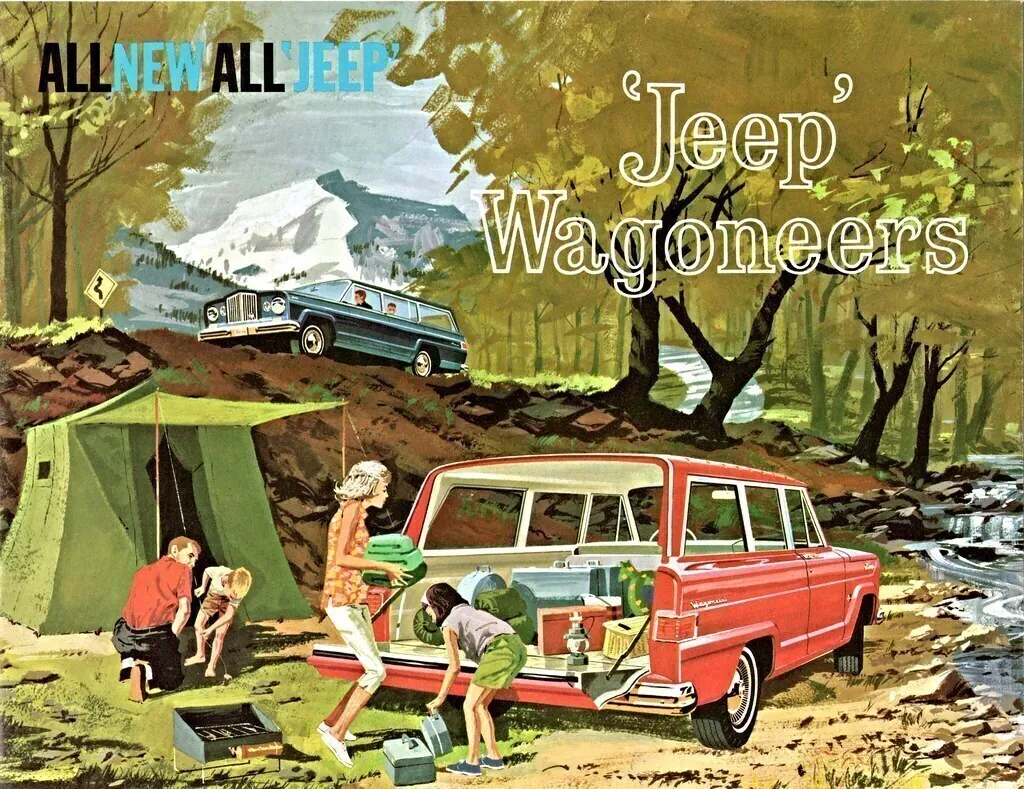
In 1987 Chrysler paid about $1.5 billion for American Motors, and its chairman said what he was buying was Jeep, the best-known car name in the world.241242
Which leaves, of Hudson, two buildings in Detroit. Neither is the great plant on Jefferson Avenue; that was torn down around 1960, and the land is a parking lot for a Chrysler plant.243244
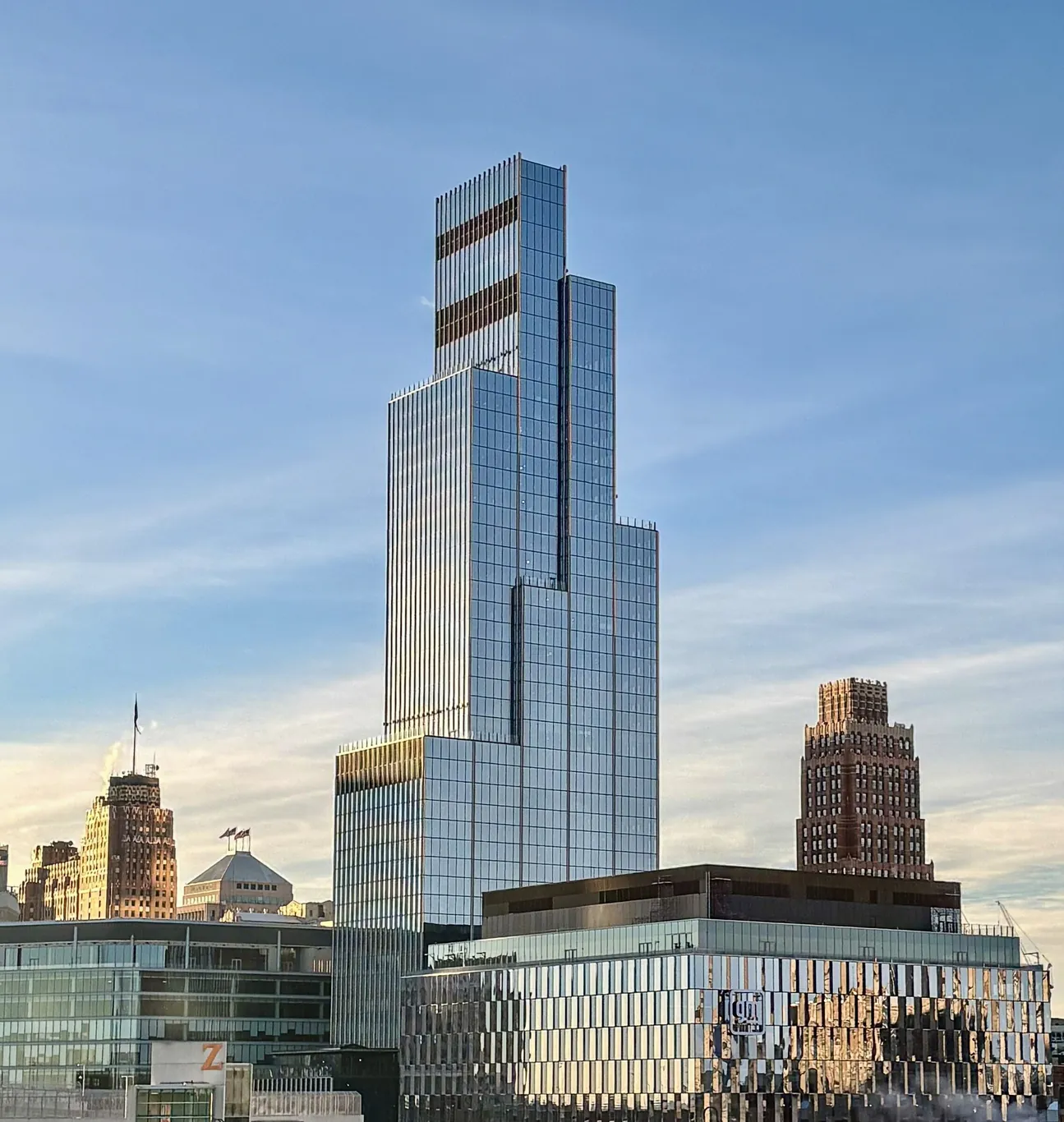
One is new. The department store closed in 1983 and was blown up in 1998.245 On its site there is now a tower that carries the Hudson name, the second-tallest building in Michigan.246 In January 2026 General Motors opened its new headquarters in the building beside it.247 The name that came off the cars in 1957 is back on the skyline, with the company that beat it next door.

The other is old. The small brick building on Mack Avenue, where the first Hudson rolled into the street on 3 July 1909, is reported to be still standing, empty, and for sale.248249
Sources
-
Time, ‘Autos: Happy Days’, 5 April 1948: “its 1929 alltime record of 300,000 cars”. ↩
-
Mac’s Motor City Garage, ‘The Year in Cars: 1929’; Wikipedia, Hudson Motor Car Company (citing Poremba p. 116): 1929 by make: Ford 1,507,132; Chevrolet 1,328,605; Hudson/Essex 300,962. Ranking is by make. ↩
-
Jayski: Hudson won 27 of 34 Grand National races in 1952 (Tim Flock 8, Herb Thomas 8, Rathmann 5, Teague 2, others 4). ↩
-
Historic Detroit; Detroit Historical Society: Hudson agreed to “help finance the creation of a new automaker”; “the primary investor in the company”. ↩
-
Mac’s Motor City Garage, ‘The Last Hudson’: last Hudson built at Kenosha 25 June 1957. ↩
-
Ward’s: AMC under Chapin Jr. bought Kaiser Jeep, deal closed by February 1970. ↩
-
Mac’s Motor City Garage, ‘The Year in Cars: 1929’; Mac’s Motor City Garage, ‘The Last Hudson’: third by make in 1929; last Hudson 1957 (1929 to 1957 = 28 years). ↩
-
Wikipedia, A. E. Barit (Hyde 2009); Detroit Jewish News obituary, 19 July 1974: joined Hudson’s purchasing department in 1910, “was a stenographer”; president 1936. ↩
-
Time, ‘Autos: Happy Days’, 5 April 1948: “he spent $18 million to retool”. ↩ ↩2
-
Over-Drive: Cadillac and Oldsmobile OHV V8s for 1949; Chrysler Hemi 1951. ↩
-
Old Cars Weekly; Wikipedia, Hudson Motor Car Company: first Hudson built 3 July 1909. ↩
-
Old Cars Weekly: April 1909 move to the former Aerocar plant at Mack Avenue and Beaufait. ↩
-
Old Cars Weekly: 20 hp Model 20 on a 100-inch wheelbase at $900, later $1,000. ↩
-
Bentley Library, Chapin papers: Chapin born 23 February 1880, so 29 on 3 July 1909. ↩
-
gphistorical; May, ‘The Detroit-New York Odyssey of Roy D. Chapin’ (1973), via Wikipedia: Detroit to New York in seven and a half days, about 14 mph. ↩
-
gphistorical (above): “seven and a half days at about 14 mph” to the New York show. ↩
-
Bentley finding aid; Old Cars Weekly: treasurer and general manager of E. R. Thomas-Detroit 1906 to 1908; the car was first sold to E. R. Thomas (of Buffalo, New York). ↩
-
Old Cars Weekly: “Roy D. Chapin was elected president of the company and Howard Coffin was vice president”. ↩
-
Detroit Historical Society; Old Cars Weekly: eight founders in all, including J. L. Hudson; Olds men named are Chapin, Coffin, Jackson, Dunham. ↩
-
Historic Detroit; Old Cars Weekly: Louise Webber was his niece; her husband Roscoe B. Jackson. ↩
-
Historic Detroit: Hudson was reluctant, then agreed. ↩
-
Historic Detroit: the niece and her husband persuaded him. ↩
-
Wikipedia, Hudson Motor Car Company: J. L. Hudson made chairman and gave the company his name. ↩
-
Mac’s Motor City Garage, ‘The Last Hudson’; Old Cars Weekly: first car 1909, last car 1957. ↩
-
Historic Detroit; Wikipedia, Hudson Motor Car Company (citing Burton 1922): 20 February 1909 (24 February in Old Cars Weekly). ↩
-
Wikipedia, Hudson Motor Car Company: about 4,000 would-be buyers sent $25 deposits after the first advertising. ↩
-
Detroit Historical Society: “sold 4,000 of their original four-cylinder models”. ↩
-
Old Cars Weekly: George W. Dunham, former Olds chief engineer, designed the car. ↩
-
Old Cars Weekly: moved into a factory previously run by Aerocar Motor Corp. ↩
-
Wikipedia, A. E. Barit (Hyde 2009); Detroit Jewish News, 19 July 1974: joined the purchasing department in 1910 as a stenographer (1909 in the obituary). ↩
-
Wikipedia, A. E. Barit; Detroit Historical Society: Barit became president in 1936. ↩
-
SWODA postcard c. 1918: “located at Jefferson Avenue East and Connor Street”. ↩
-
Wikipedia, Hudson Motor Car Company (citing Butler, The History of Hudson, 1982); Detroit Historical Society: Albert Kahn plant on a 22-acre site. ↩
-
Wikipedia, Hudson Motor Car Company (citing Butler 1982): opened 29 October 1910. ↩
-
Wikipedia, Hudson Motor Car Company, production table (Seltzer 1928 among sources): 10,918 in 1915. ↩
-
Mac’s Motor City Garage: Super Six introduced 16 January 1916. ↩
-
Mac’s Motor City Garage: priced from $1,375. ↩
-
Mac’s Motor City Garage: patented counterweighted crankshaft. ↩
-
Mac’s Motor City Garage; Wikipedia Hudson Super Six (citing Hemmings): Ralph Mulford, flying mile of 102.53 mph on Daytona Beach. ↩
-
Mac’s Motor City Garage: Mulford Pikes Peak record “stood for eight years”. ↩
-
Wikipedia Hudson Super Six; Detroit Historical Society: 5 days 3 hours 31 minutes, eight-hour stop, return run; DHS dates the two-way trip to 1916. ↩
-
Mac’s Motor City Garage; Wikipedia, Hudson Motor Car Company: 1916 deliveries nearly doubled to about 26,000 (Mac’s); 33,186 built (Wikipedia). ↩
-
Detroit Public Library photo: Super-Six banner in the Normandin-Campen window, 1916 to 1917. ↩
-
Detroit Historical Society: “world’s largest manufacturer of six-cylinder cars” (company claim). ↩
-
SWODA postcard: c. 1918: “the Hudson is one of its most modern plants”. ↩
-
Time, ‘Business & Finance: Closed Cars’, 15 October 1923; Frederick Lewis Allen, Only Yesterday (1931): closed cars “only 10% of the output” in 1919; Allen: 10.3 per cent. ↩
-
Kit Foster: Essex launched at the Los Angeles Auto Show, January 1919. ↩
-
Kit Foster: 179 cu in four matched the Model T in size, nearly three times the power. ↩
-
Wikipedia, Essex (automobile): 50 hours, 3,037.4 miles at 60.75 mph. ↩
-
Wikipedia, Essex (automobile) (Kimes, Standard Catalog 1805-1942): 1922 Essex coach $1,495. ↩
-
Wikipedia, Essex (automobile): $300 more than the touring car. ↩
-
Kit Foster; Wikipedia, Essex (automobile): by 1924 (Foster) or 1925 (Wikipedia) the coach cost the same as or less than the tourer. ↩
-
Frederick Lewis Allen, Only Yesterday (1931): 82.8 per cent of 1927 cars closed. ↩
-
Swift, The Big Roads (2011), via Wikipedia, Essex (automobile): credited with popularising the closed car. ↩
-
Kit Foster; Wikipedia, Essex (automobile): Essex outsold Hudson from its introduction. ↩
-
Wikipedia, Essex (automobile): more than 1.13 million Essex cars sold. ↩
-
Wikipedia, Hudson Motor Car Company, production table: 25,415 in 1921. ↩
-
Wikipedia, Hudson Motor Car Company, production table: 263,937 in 1925. ↩
-
MotorCities: 9501 Conner plant built 1925 for Hudson, Albert Kahn design, sent bodies to Jefferson. ↩
-
Time, ‘Autos: Happy Days’, 5 April 1948; Motor Sport, October 1963: “1929 alltime record of 300,000 cars”; 300,962. ↩
-
Mac’s Motor City Garage, ‘The Year in Cars: 1929’: Chevrolet 1,328,605 against Hudson/Essex 300,962. ↩
-
Wikipedia, Hudson Motor Car Company (citing coachbuilt.com): Biddle and Smart contract ended in 1930: falling prices and high freight from Massachusetts. ↩
-
Detroit Public Library ad art, 2 November 1931: “Watch Hudson! … which means Essex, too!”. ↩
-
Detroit Historical Society; Detroit Public Library: Essex-Terraplane launched 21 July 1932; Earhart and Chapin photographed beside the Hudson factory. ↩
-
Detroit Historical Society: more than 2,000 dealers from 40 states. ↩
-
Detroit Public Library; Detroit Historical Society: dated photographs of Earhart at the launch; she christened the car (bottle in conflict, not claimed). ↩
-
Wikipedia, Amelia Earhart (general record): solo Atlantic flight 20 to 21 May 1932, first woman. ↩
-
Detroit Historical Society: each dealer was given a Terraplane demonstrator to drive home. ↩
-
Mac’s Motor City Garage, ‘That’s Terraplaning’; Wikipedia Terraplane; Kit Foster: Wright received one of the first Terraplanes; accounts differ on whether he bought it or was given it. ↩
-
New York Times, 25 July 1932, p. 7, via rarenewspapers.com listing 721474: first Terraplane advertisement, full page, 25 July 1932. ↩
-
Mac’s Motor City Garage, ‘That’s Terraplaning’; Kit Foster: prices from $425. ↩
-
Mac’s Motor City Garage, ‘That’s Terraplaning’: Terraplane six 70 hp against 65 hp for the 1932 Ford V8. ↩
-
Motor Sport, July 1992: Rolls-Royce bought a Terraplane Eight in October 1933 for evaluation. ↩
-
Miller Center: Hoover appointed Chapin 8 August 1932 (21 July plus 18 days). ↩
-
Miller Center; Wikipedia Roy D. Chapin: served to 3 March 1933. ↩
-
Bentley finding aid; Wikipedia Roy D. Chapin: went back to Hudson as president in 1933. ↩
-
Wikipedia Terraplane: Essex-Terraplane 1932 to 1933, Terraplane alone from 1934. ↩
-
Mac’s Motor City Garage: nearly 86,000 vehicles in 1934. ↩
-
Mac’s Motor City Garage 1934 post; Time, ‘Autos: Happy Days’, 5 April 1948: 86,000 against about 300,000 (about 29 per cent). ↩
-
Wikipedia Roy D. Chapin (citing NYT obituary, 17 February 1936); Bentley; Miller Center: died 16 February 1936 in Detroit, aged 55. ↩
-
Wikipedia, A. E. Barit (Hyde 2009); Detroit Historical Society: Barit became president in 1936. ↩
-
Wikipedia, A. E. Barit: began with Hudson in 1910 in purchasing, as a stenographer. ↩
-
Mac’s Motor City Garage 1934 film post; Reuther Library, UAW Local 154 finding aid: recognition of UAW Local 154 in 1937 after strikes and a sit-down at the body plant. ↩
-
Mac’s Motor City Garage 1934 film post; Reuther Library, UAW Local 154 finding aid: Hudson recognised UAW Local 154 in 1937. ↩
-
Langworth; Mac’s Motor City Garage step-down secrets: Frank Spring conceived the step-down package as early as 1941. ↩
-
Ate Up With Motor: body-on-frame was the Detroit norm; unit bodies existed (Lincoln-Zephyr, Nash 600). ↩
-
Ate Up With Motor: Monobilt put the passenger floor inside and below the frame rails. ↩
-
Ate Up With Motor; Driven to Write: first low unit-body prototype built by Carl Cenzer in 1941. ↩
-
Ate Up With Motor: Barit put off by the low roof and rakish stance. ↩
-
Ate Up With Motor; Driven to Write: low roof and rakish stance. ↩
-
Time, ‘Autos: Happy Days’, 5 April 1948: “After a 1940 loss of $1.5 million”. ↩
-
Wikipedia, Hudson Motor Car Company (citing HyperWar): Navy contract for Oerlikon 20 mm guns dated 22 May 1941. ↩
-
usautoindustryworldwartwo.com; Wikipedia, Hudson Motor Car Company: 33,201 20mm Oerlikon anti-aircraft guns. ↩
-
usautoindustryworldwartwo.com; Truth About Cars, 30 May 2011: Navy Ordnance Plant, Center Line, government-built, $20,000,000. ↩
-
usautoindustryworldwartwo.com: peak 2,330 in September 1943; “the US Navy terminated the contract the next month”; work went to Westinghouse. ↩
-
usautoindustryworldwartwo.com: 4,000 Hall-Scott Invader marine engines, December 1942 to September 1944. ↩
-
Time, ‘Autos: Happy Days’, 5 April 1948: “netted an average of nearly $2 million a year making antiaircraft guns, invasion-barge engines and aircraft parts”. ↩
-
Time, ‘Management: Sound & Fury’, 4 June 1945: “a stockholders’ meeting of Hudson Motor Car Co.”, “last week” in the 4 June 1945 issue (annual and Detroit not stated). ↩
-
Wikipedia, A. E. Barit: born 30 August 1890; president from 1936. ↩
-
Time, ‘Management: Sound & Fury’, 4 June 1945: $8.5 million for 400,000 unissued shares. ↩
-
Time, ‘Management: Sound & Fury’, 4 June 1945: “Detroit body-builders” retired from General Motors (Fisher Body). ↩
-
Time, ‘Management: Sound & Fury’, 4 June 1945: about book value, $21.66 a share, against a market price of about $28. ↩
-
Time, ‘Management: Sound & Fury’, 4 June 1945: Barit argued the stock was worth well above its book value. ↩
-
Time, ‘Management: Sound & Fury’, 4 June 1945: “an accusation that he had secretly rejected the Fisher offer six months ago without informing the directors”. ↩
-
Time, ‘Management: Sound & Fury’, 4 June 1945: Barit “hotly retorted that the Fishers had pressured him to sell”; no explicit denial. ↩
-
Time, ‘Management: Sound & Fury’, 4 June 1945: headline “Management: Sound & Fury”. ↩
-
Ate Up With Motor; Driven to Write: Spring talked Barit round after civilian production resumed in autumn 1945. ↩
-
Time, ‘Management: Sound & Fury’, 4 June 1945; Time, ‘Autos: Happy Days’, 5 April 1948: $8.5 million offer against $18 million retooling. ↩
-
Time, ‘Autos: Happy Days’, 5 April 1948: “In 1946 Hudson turned out 93,000 cars”. ↩
-
MotorCities: step-down production began 12 October 1947. ↩
-
MotorCities; Mac’s Motor City Garage; Langworth: shown December 1947 at the Masonic Temple; nationwide showings from 7 December 1947. ↩
-
Ate Up With Motor: Hudson’s “Monobilt” unit body. ↩
-
Ate Up With Motor: more than 300 lb lighter than a Buick or Chrysler of the day. ↩
-
Ate Up With Motor: 1936 Lincoln-Zephyr and 1941 Nash 600 were American unit-body cars. ↩
-
Ate Up With Motor: Hudson patents 2,669,462, 2,627,426, 2,627,437. ↩
-
Time, ‘Autos: Happy Days’, 5 April 1948: “passengers step over the frame and down into it from the curb”. ↩
-
Ate Up With Motor; Mechanix Illustrated, February 1950, pp. 86-88: 60 inches high, about 5 inches lower than rivals; MI spec panel 60 1/2 in. ↩
-
Time, ‘Autos: Happy Days’, 5 April 1948: “more headroom and width than any other car now being mass-produced. It also has a lower center of gravity”. ↩
-
Mechanix Illustrated, March 1948, p. 80: “says Tom McCahill, MI’s auto expert”. ↩
-
Mechanix Illustrated, March 1948, p. 80; Mechanix Illustrated, February 1950, pp. 86-88: “The one tested was the eight”; “travelled less than 200 miles”; 1950: “my test was made, for the most part, in deep snow”. ↩
-
Mechanix Illustrated, March 1948, p. 80: “the most luxurious car ever offered in what is known as the medium-priced bracket, and it is tops in value”. ↩
-
Mechanix Illustrated, February 1950, pp. 86-88: “This flash photo was taken from the back seat by Editor Bill Parker … McCahill had the Hudson up to 103 mph”; the car was the Commodore Six. ↩
-
Mechanix Illustrated, February 1950, pp. 86-88: “hit the curve still doing 92”. ↩
-
Mechanix Illustrated, February 1950, pp. 86-88: Gil Paust’s 1949 Ford: “The Hudson took the Ford on every acceleration run we made!”. ↩
-
Mechanix Illustrated, February 1950, p. 158: on the cow path across the fields “I found I was scraping … a road grader”; “cow path driving is a bit on the eccentric side”. ↩
-
Mechanix Illustrated, February 1950, pp. 86-88: “Hudson’s the lowest car on the market (60 1/2 in.). It also has the widest seats (64 in.)”. ↩
-
Nationaal Archief / Anefo photograph, Amsterdam RAI, 29 April 1948: 1948 Hudson Commodore under a HUDSON sign, 29 April 1948. ↩
-
Time, ‘Autos: Happy Days’, 5 April 1948: “step up its 600-car daily production to 1,000 a day” by late May. ↩
-
Time, ‘Autos: Happy Days’, 5 April 1948: “extra 5,000 monthly tons of steel from a Government mill he had leased”. ↩
-
Time, ‘Autos: Happy Days’, 5 April 1948: “in 1947 Hudson had doubled its profit to $5.7 million”. ↩
-
Driven to Write: 142,500 calendar-year sales, best since 1929 (unsourced there). ↩
-
Mac’s Motor City Garage; indieauto (Langworth, Standard Catalog): 159,210 model-year cars, Hudson’s postwar record. ↩
-
Mac’s Motor City Garage: Super Six from $2,156. ↩
-
Mac’s Motor City Garage: break-even about 75,000 a year, per Roy D. Chapin Jr. to Langworth. ↩
-
Time, ‘Autos: Happy Days’, 5 April 1948: “shy Ed Barit was beaming with good news”. ↩
-
Ate Up With Motor; Wikipedia, Hudson Hornet: Hornet for 1951 on the step-down body. ↩
-
Ate Up With Motor; Wikipedia, Hudson Hornet: 308 cu in L-head six rated at 145 hp. ↩
-
Wikipedia, Hudson Hornet: $2,543 to $3,099, matching the Commodore Eight. ↩
-
Wikipedia, Marshall Teague (citing Wood, Declarations of Stock Car Independents, 2010, p. 5): Teague, a Daytona Beach service-station owner. ↩
-
Wikipedia, Marshall Teague (citing Wood, Declarations of Stock Car Independents, 2010, p. 5): “visiting the automaker’s factory without an appointment”. ↩
-
Wikipedia, Marshall Teague (citing Wood, Declarations of Stock Car Independents, 2010, p. 5): Hudson backed him with cars and corporate support. ↩
-
Wikipedia, Marshall Teague (citing Wood, Declarations of Stock Car Independents, 2010, p. 5); Motor Sport: generally called the first Detroit-backed stock-car team. ↩
-
Ate Up With Motor: $1,000 monthly stipend, kept prize money; Vince Piggins worked with him. ↩
-
Jayski: No. 6 Hudson, 11 February 1951, 54 starters, Tim Flock second in a Lincoln. ↩
-
Motor Sport: Herb Thomas, 1951 champion, in a Hudson from mid-season. ↩
-
Wikipedia, Hudson Hornet; Ate Up With Motor: Twin H-Power mid-1951 as an $85.60 dealer option. ↩
-
Wikipedia, Hudson Hornet: standard on the 1952 Hornet. ↩
-
Jayski; Motor Sport: Flock, Thomas, Rathmann, Teague, Baker, Shuman, Bob Flock, Donald Thomas; Tim Flock champion 1952. ↩
-
Motor Sport; Wikipedia Fabulous Hudson Hornet (Life ad 25 May 1953): “Fabulous” on cars and in advertising. ↩
-
Jayski 1953 and 1954 season tables; legendsofnascar: 22 of 37 (1953); 17 of 37 (1954). ↩
-
Jayski 1953 and 1954 season tables: Herb Thomas 12 in 1953 and 12 in 1954. ↩
-
legendsofnascar; Wikipedia, Marshall Teague (citing Wood, Declarations of Stock Car Independents, 2010, p. 5): 12 of 13 AAA stock-car events in 1952; AAA Stock Car champion 1952 and 1954. ↩
-
Wikipedia, Hudson Hornet (Hemmings, serial records): 43,666 (1951). ↩
-
Wikipedia, Hudson Hornet: 35,921 (1952). ↩
-
Wikipedia, Hudson Hornet: 27,208 (1953). ↩
-
Wikipedia, Hudson Hornet: 24,833 (1954). ↩
-
Wikipedia, Hudson Hornet; Ate Up With Motor: 7-X racing engine about 210 hp, sold over the dealer’s counter. ↩
-
Mac’s Motor City Garage; Ate Up With Motor; Over-Drive: about 70,000 in 1952. ↩
-
Mac’s Motor City Garage: break-even 75,000 (Chapin Jr.) against about 70,000. ↩
-
Pixar, Cars (2006); Wikipedia Fabulous Hudson Hornet: Doc Hudson, a 1951 Hudson Hornet. ↩
-
Pixar, Cars (2006): Doc’s racing past unknown to the town. ↩
-
Ate Up With Motor: body-on-frame cars let Detroit change sheet metal; Chevrolet restyles 1949, 1953, 1955. ↩
-
Ate Up With Motor; indieauto: the unit body “did not easily lend itself to restylings”. ↩
-
Ate Up With Motor: Spring’s team managed a modest facelift for 1954. ↩
-
Mac’s Motor City Garage: Super Six over 57 percent of 1949 output. ↩
-
Mac’s Motor City Garage: 121,408 (1950). ↩
-
Hudson Jet history, Hudson-Essex-Terraplane Club: 66,143 Hudsons in 1953. ↩
-
Over-Drive; Mac’s Motor City Garage ‘Game Changer’: Cadillac and Oldsmobile OHV V8s for 1949. ↩
-
Over-Drive: Chrysler Hemi for 1951. ↩
-
Over-Drive: from 1951 to 1955 every other maker built or bought an OHV V8. ↩
-
Ate Up With Motor: L-head six. ↩
-
Wikipedia, Hudson Hornet; Ate Up With Motor: 7-X about 210 hp, sold over the dealer’s counter. ↩
-
Over-Drive: Hudson’s six at 170 hp in street trim; mid-price V8s topping 220. ↩
-
Wikipedia, Hudson Motor Car Company; Mac’s Motor City Garage, ‘Making a Hash of it’: first Hudson V8 was the Packard-built 320 for 1955. ↩
-
Ate Up With Motor: Hudson lost money in 1951. ↩
-
Ate Up With Motor: 1952 profit thanks to Korean War contracts. ↩
-
Time, ‘Autos: Happy Days’, 5 April 1948; Mac’s Motor City Garage: 1929 record 300,000; about 70,000 in 1952. ↩
-
Kit Foster: Rambler beat the Jet. ↩
-
Mac’s Motor City Garage, ‘Flameout’: Spring benchmarked on the Fiat 1400. ↩
-
Hyde, Storied Independent Automakers (2009), via Wikipedia, Hudson Jet; Mac’s Motor City Garage, ‘Flameout’: chair-high seating, tall greenhouse for hats; “dining-room-style seating and a generous roofline”. ↩
-
Mac’s Motor City Garage, ‘Flameout’; Wikipedia, Hudson Jet (Cars and Parts 2000); Kit Foster calls it legend: Jim Moran, Chicago, about 5 percent of Hudson’s output, pushed for a 1952 Ford-style roof, wraparound rear window, Oldsmobile-like tail lights. ↩
-
Mac’s Motor City Garage, ‘Flameout’: Spring was reportedly deeply disappointed. ↩
-
Mac’s Motor City Garage, ‘Flameout’; Ate Up With Motor: “the last of the company’s cash reserves”. ↩
-
Mac’s Motor City Garage, ‘Flameout’; Hudson Jet history, Hudson-Essex-Terraplane Club; Wikipedia, Hudson Jet (Popular Mechanics, August 1954): $16m (Mac’s), $12m (Jet club), $10 to 16m (Wikipedia citing PM). ↩
-
Mac’s Motor City Garage, ‘Flameout’; Hudson Jet history, Hudson-Essex-Terraplane Club: introduced late 1952 for 1953; base $1,858. ↩
-
Mac’s Motor City Garage, ‘Flameout’: $1,613 Chevrolet and $1,734 Ford against the 1953 Jet. ↩
-
Mac’s Motor City Garage, ‘Flameout’: Hydra-Matic $176 extra. ↩
-
Hudson Jet history, Hudson-Essex-Terraplane Club; Wikipedia, Hudson Jet: 21,143 in 1953. ↩
-
Kit Foster: 31,778 Ramblers in 1953. ↩
-
Hudson Jet history, Hudson-Essex-Terraplane Club: about 33 percent of 66,143. ↩
-
Hudson Jet history, Hudson-Essex-Terraplane Club: 14,224 in 1954, 28 percent of 50,660. ↩
-
AP, The Sun-Telegram, 21 March 1954, p. 1, cited by Wikipedia Hudson Motor Car Company: “$10,411,060 Loss Reported by Hudson”, 21 March 1954. ↩
-
AP, The Sun-Telegram, 21 March 1954, p. 1, cited by Wikipedia Hudson Motor Car Company: loss of $10,411,060 in 1953 against a profit of $8,307,847 in 1952. ↩
-
Over-Drive; Wikipedia, American Motors Corporation (Olsen and Cabadas 2002, p. 127): Mason believed the independents had to combine; raised it with Packard as early as 1946. ↩
-
Hagley, 14 January: the merger of the companies who manufactured the Nash, Hudson, Studebaker and Packard lines. ↩
-
Wikipedia, Hudson Motor Car Company; Ate Up With Motor: discussed first in 1952; Barit declined. ↩
-
Ate Up With Motor: Mason approached Barit twice and Barit declined both times. ↩
-
Mac’s Motor City Garage: merger talks publicly confirmed 27 November 1953. ↩
-
Hagley, 14 January; Wikipedia, Hudson Motor Car Company (Severson 2009): agreement 14 January 1954. ↩
-
Wikipedia, American Motors Corporation: three Hudson shares for two AMC; one Nash-Kelvinator share for one AMC. ↩
-
Hagley, 14 January; Kenosha History Center print 564: led by Nash-Kelvinator president George W. Mason; Romney his vice-president. ↩
-
The Detroit Bureau: framed as a merger to reassure Hudson dealers. ↩
-
Kenosha History Center print 564: merger completed 1 May 1954, forming American Motors. ↩
-
Kenosha History Center print 564: commemoration photograph of Barit, Mason and Romney. ↩
-
Ate Up With Motor; Kenosha History Center print 564: AMC board seat and a mostly nominal consultant role; caption says director. ↩
-
Time, ‘Personnel: Changes of the Week’, 25 October 1954: Romney “moved up from executive vice president”. ↩
-
Wikipedia, American Motors Corporation; Time, ‘Autos: Merger No. 3’, 28 June 1954: Packard’s James Nance wanted to be chief executive; Packard bought Studebaker in 1954. ↩
-
Mac’s Motor City Garage: step-down production ended autumn 1954. ↩
-
Mac’s Motor City Garage: last step-downs loaded for shipment 29 December 1954. ↩
-
Reuther Library, UAW Local 154 finding aid: “The entire manufacturing operation of Hudson Motor Car Company was moved to Kenosha and Milwaukee, Wisconsin after the merger”. ↩
-
Reuther Library, UAW Local 154 finding aid: subject heading “Lay-off and transfer of workers to Wisconsin”; “some of the laid off Hudson employees found work” in Special Products. ↩
-
Reuther Library, UAW Local 154 finding aid: “After 1955 the membership in Local 154 dropped rapidly”; ceased 1963. ↩
-
Hagley, 14 January; Wikipedia George W. Mason (Time ‘Milestones’, 18 October 1954): Mason’s “unexpected death on October 8, 1954”. ↩
-
Wikipedia George W. Mason: died aged 63. ↩
-
Time, ‘Personnel: Changes of the Week’, 25 October 1954: “George Romney, 47, moved up … to president, succeeding the late George W. Mason”. ↩
-
Time, ‘Personnel: Changes of the Week’, 25 October 1954: “there are no mergers under way either directly or indirectly”. ↩
-
Getty Images Archive Films clip 150480623 (newsreel, 1 November 1954): Hudson and Nash to share the “same basic body”, as Olds and Buick did. ↩
-
Mac’s Motor City Garage, ‘Making a Hash of it’: shared Nash greenhouse, chassis and floor pan, Hudson-specific sheet metal. ↩
-
Mac’s Motor City Garage, ‘Making a Hash of it’: Hudson loyalists called the car “the Hash”. ↩
-
Wikipedia, Hudson Motor Car Company (Flory; Kimes and Clark); Mac’s Motor City Garage, ‘Making a Hash of it’: Packard-built 320 cu in V8 for 1955. ↩
-
Curbside Classic: 1955 about 20,000 big Hudsons (definitions conflict). ↩
-
Curbside Classic: 1956 V-Line front credited to AMC design chief Ed Anderson. ↩
-
Curbside Classic; Over-Drive: about 10,000 big Hudsons in 1956. ↩
-
Mac’s Motor City Garage, ‘The Last Hudson’: Rambler sold more than 91,000 in 1957. ↩
-
Ate Up With Motor; oldmotors.net: November 1956 decision to end both names after 1957. ↩
-
Ate Up With Motor; Wikipedia, A. E. Barit: resigned from the AMC board in protest, December 1956 per Ate Up With Motor; born August 1890. ↩
-
Wikipedia, A. E. Barit: president 1936 to 1954; died 14 July 1974. ↩
-
Wikipedia, Hudson Hornet (Nau, AMC Production Statistics); Mac’s Motor City Garage, ‘The Last Hudson’: 4,108 Hornets in 1957. ↩
-
Mac’s Motor City Garage, ‘The Last Hudson’; Wikipedia, AMC V8 engine: 327 V8 “rated at 255 hp” in the 1957 Hornet. ↩
-
Wikipedia, AMC V8 engine; Mac’s Motor City Garage, ‘Making a Hash of it’: Packard V8 from 1955 and AMC’s 250 V8 in the 1956 Hornet Special. ↩
-
Ward’s; Wikipedia Roy D. Chapin Jr. (Long 2004): joined Hudson in 1938 from Yale as salesman, test driver and experimental engineer. ↩
-
Ward’s: Chapin Jr. ran AMC (chairman and chief executive from 1967). ↩
-
Ward’s; Wikipedia, American Motors Corporation: Kaiser Jeep deal closed by February 1970. ↩
-
Ward’s AutoWorld, Rothenberg, 1996, via Wikipedia Roy D. Chapin Jr.: “We got it for a song, about $75 million”. ↩
-
LA Times, 10 March 1987, via Wikipedia, American Motors Corporation; Christian Science Monitor, 7 August 1987: agreed 9 March 1987, about $1.5 billion; completed 5 August 1987. ↩
-
LA Times, 10 March 1987, via Wikipedia, American Motors Corporation: Iacocca: “Jeep, the best-known automotive brand name in the world”. ↩
-
Historic Detroit; usautoindustryworldwartwo.com: demolished 1959 to 1961. ↩
-
Autotrader Classics: land used as a Chrysler assembly plant parking lot. ↩
-
Wikipedia, Hudson’s Detroit; GM news release, 12 January 2026: store closed in 1983 and imploded in 1998. ↩
-
Wikipedia, Hudson’s Detroit; GM news release, 12 January 2026: 49-storey tower topped out 10 April 2024, “the second-tallest building in Detroit as well as in Michigan”. ↩
-
Wikipedia, Hudson’s Detroit; GM news release, 12 January 2026: GM headquarters “formally opened in the building on January 12, 2026”, in the 12-storey Block Building on the site. ↩
-
eherg listing; Mac’s Motor City Garage: 6501 Mack, the Aerocar building where Hudson started in 1909. ↩
-
eherg listing (undated); Mac’s Motor City Garage comments to 2016: reported still standing, abandoned, listed at $1,075,000. ↩