 Open Books
Picture at the top: the film’s thumbnail. The bottle photo is by Brett Jordan, CC BY 2.0, via Wikimedia Commons, with the label retouched; the rest is drawn for this film.

A bottle of ketchup explodes in Saint Paul
On 19 August 1903 a bottle of catsup exploded in the hands of a twelve-year-old girl, Emma Setley, in Saint Paul, Minnesota. The St. Paul Globe reported that she was “badly cut by flying glass”.1
Cheap ketchup at the time was made from what the canneries had left over: skins, cores, stems, and green or rotten tomatoes. A government chemist, A. W. Bitting, also listed “the surplus juice from the filling machines”.2 It was stored in barrels, where it fermented, and fermentation makes gas. Bitting recorded barrel heads blown out by it.2 In a sealed glass bottle the same gas could burst the glass.
The preservative and the Poison Squad
Makers kept their ketchup from spoiling with chemical preservatives. By about 1900, studies in several states found that most commercial ketchup samples contained some form of antiseptic.3
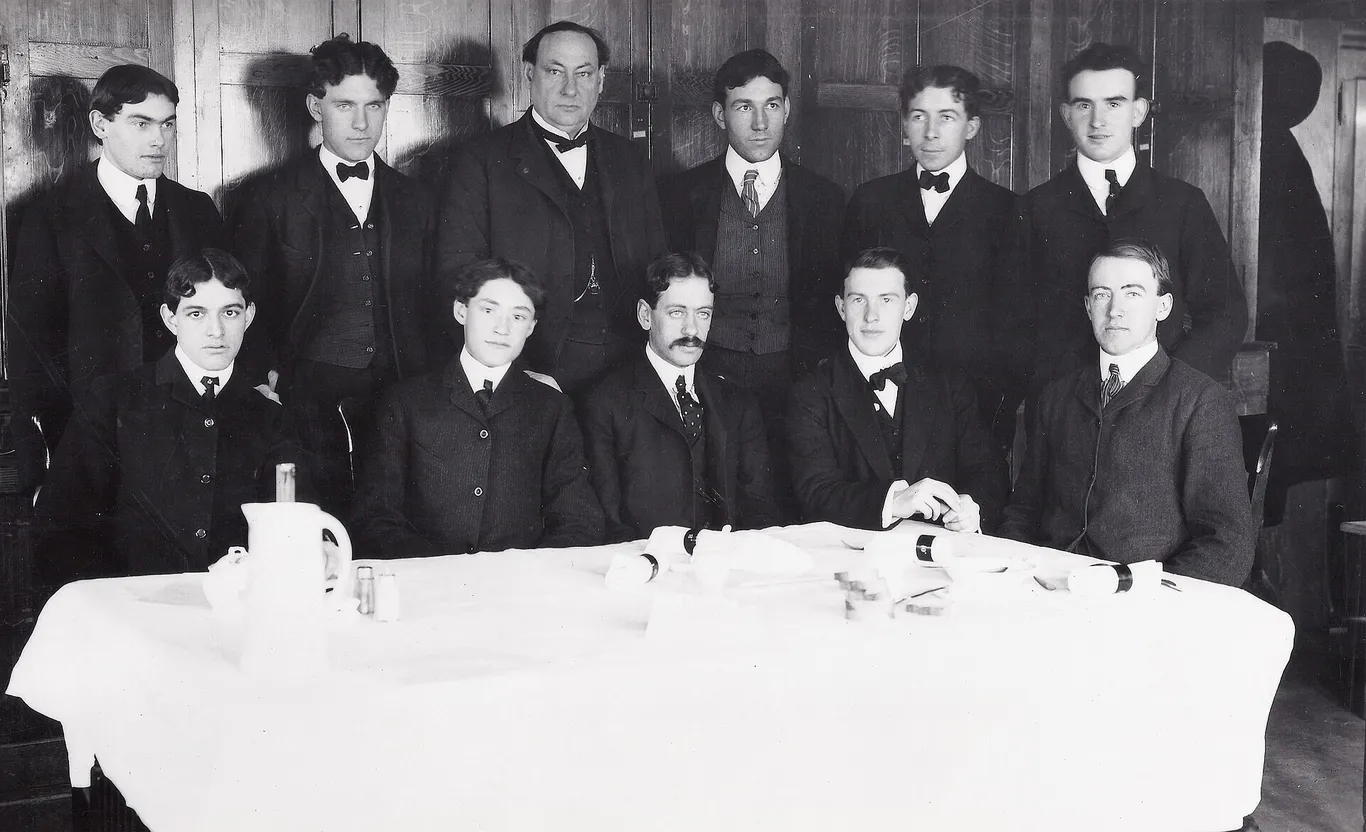
In 1902 Harvey Wiley, chief chemist at the US Department of Agriculture, began feeding preservatives to twelve young men at a dining table in Washington, to see what they did to them.4 The newspapers called the men the Poison Squad.5 The sign at the dining room read “None but the brave can eat the fare.”4

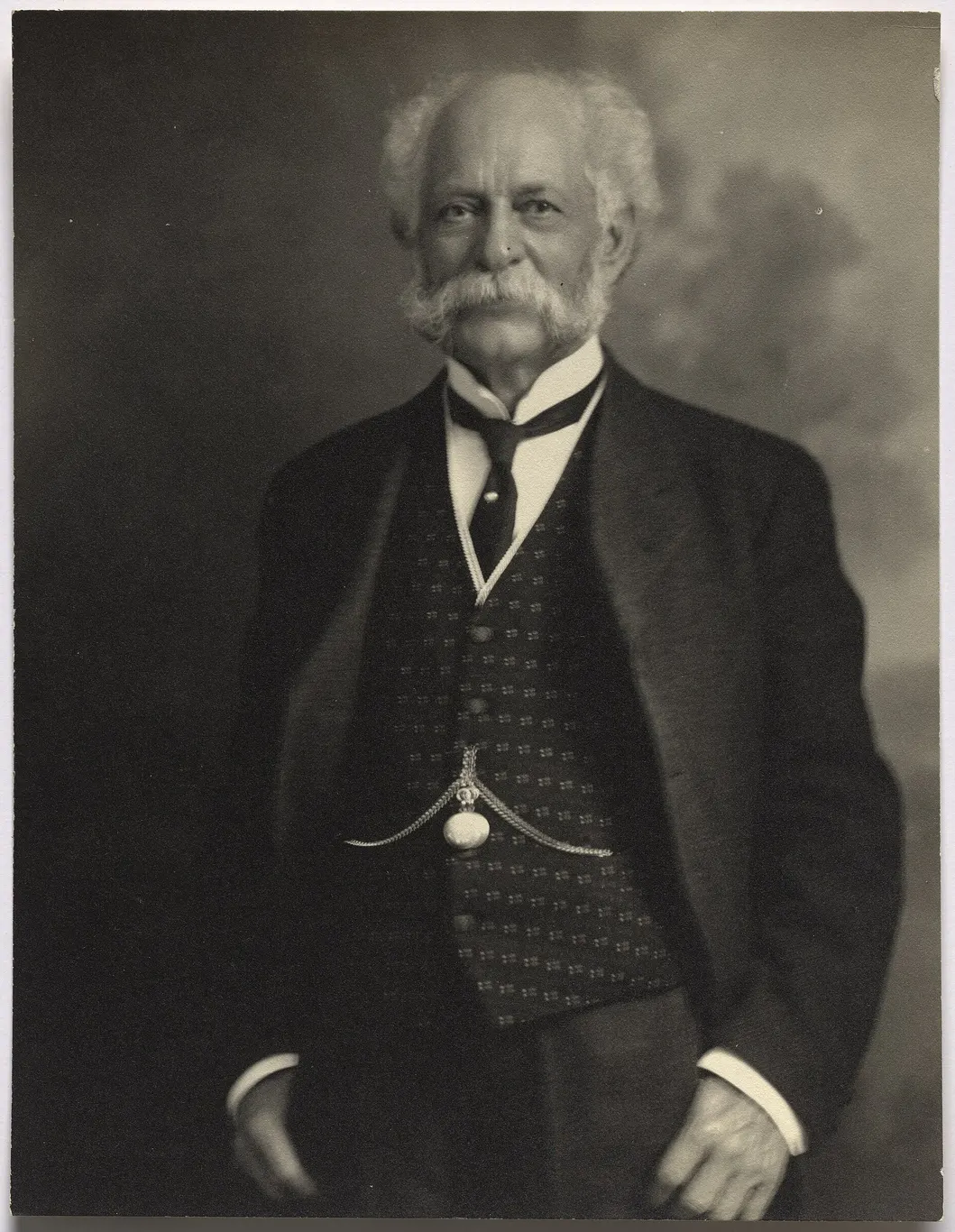
Henry Heinz, the salesman
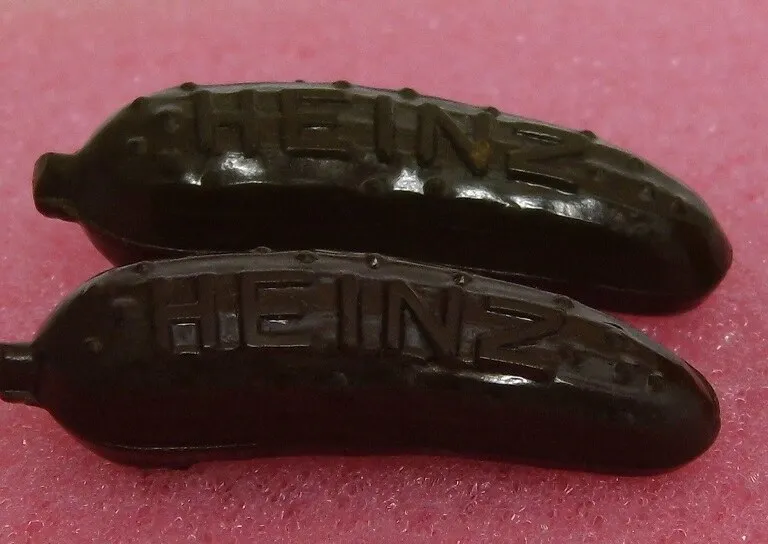
In Pittsburgh, Henry John Heinz was selling pickles. At the Chicago World’s Fair in 1893 his stand was in an upstairs gallery that few visitors reached, so he paid local boys to hand out tokens promising a free souvenir. The souvenir was a pin shaped like a pickle.6 The story goes that the crowd grew so large the gallery floor had to be strengthened.7

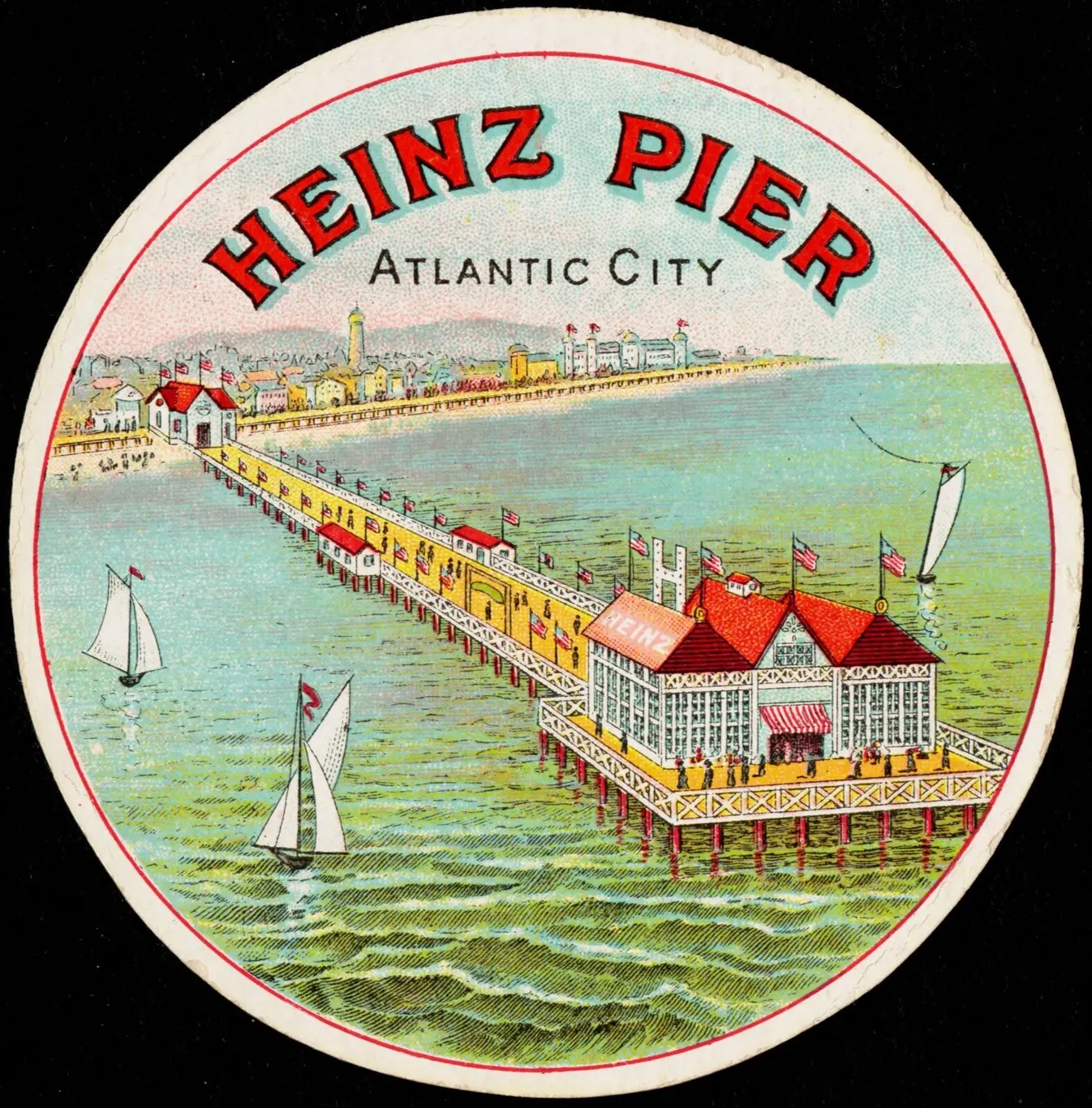
He put “57 Varieties” on his labels at a time when he sold more than sixty products.8 He hung a forty-foot electric pickle, lit by 1,200 bulbs, over Fifth Avenue in New York,9 and he took over a pier in Atlantic City and gave pickles away there too.10
A ketchup with no preservative
By 1900 Heinz had a showpiece factory on Pittsburgh’s North Side.11 He gave his cousin and general manager, Sebastian Mueller, the job of making a ketchup that would keep with no preservative at all.12 The answer, on sale by 1906 at the latest, used ripe tomatoes and far more of them, with about twice as much vinegar, sugar and salt as other commercial ketchups.3 It sold about twelve million bottles over two years with hardly any spoiling.13 Heinz had long bottled in clear glass, so the shopper could see what was inside.14

Ripe tomatoes cost more than cannery leftovers. While the preservatives were legal, Heinz ketchup was the expensive option on the shelf. If they were banned, it would be one of the few left.
Heinz and Wiley want the same law
In December 1905 Wiley led a group of food makers and women campaigners in to see President Theodore Roosevelt. Heinz’s representatives were among them.15 One company history says Henry sent his son Howard, who would later run the firm, to lobby.16 In June 1906, after Upton Sinclair’s novel The Jungle had appalled the public, Congress passed the Pure Food and Drug Act.17 Heinz had been part of the lobbying effort for it.18
The other makers fight back
The other ketchup makers told the President that a ban on preservatives would ruin them. They spread their own exploding-bottle stories; in one, a priest in Washington, Pennsylvania, “was hauled across the room and struck his head against the door”.19 The makers of Blue Label said that without a preservative they would have to cook the tomato flavour out, and they wanted Wiley removed.3

Saccharin in the President’s coffee
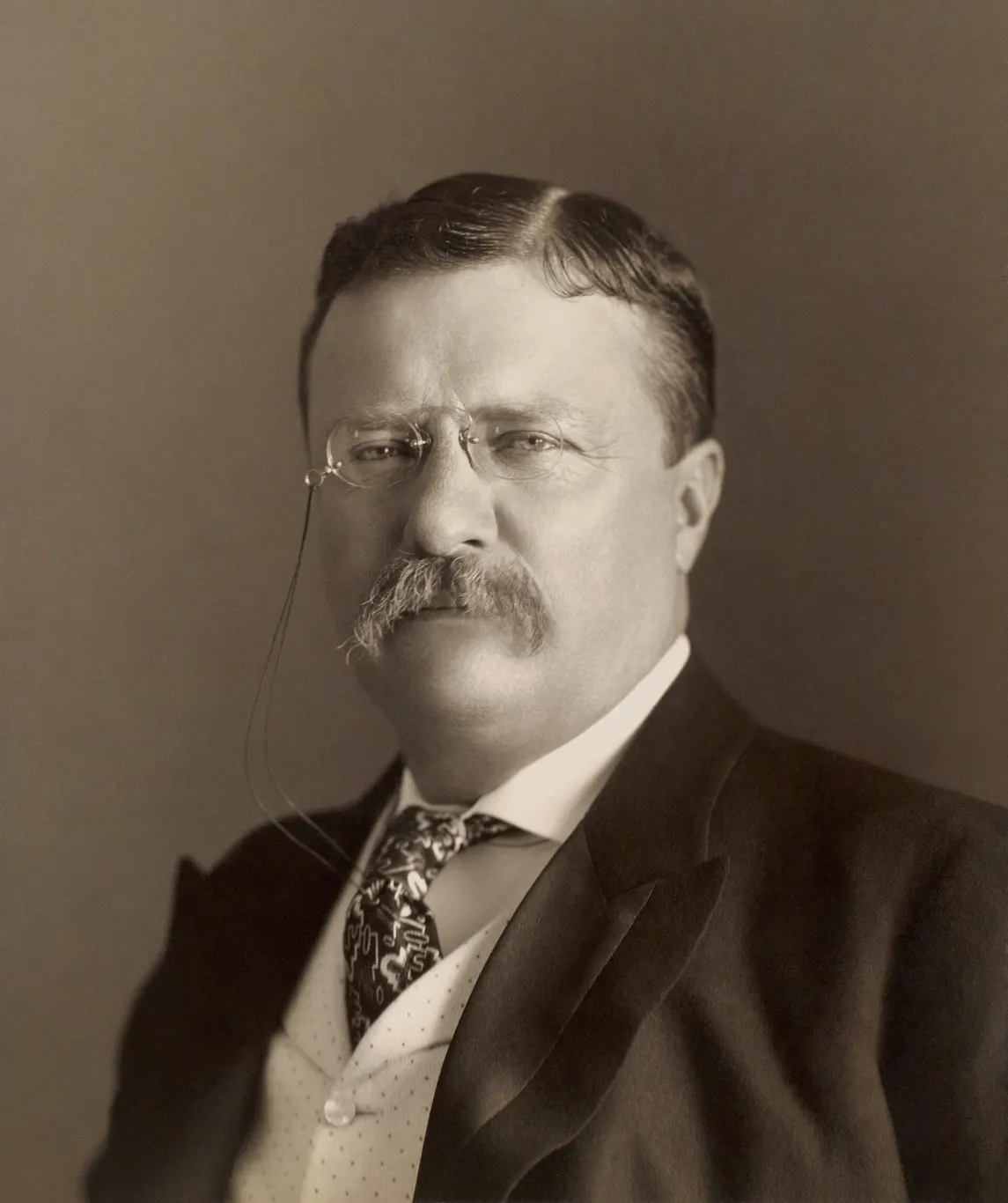
The way Wiley told it, at a White House meeting a canner said his firm saved money by sweetening tinned corn with saccharin, a coal-tar sugar substitute. Wiley said everyone who ate that corn had been deceived. Roosevelt asked whether he was saying saccharin was injurious to health; Wiley said he was. Roosevelt replied that his own doctor gave it to him every day, and said: “Anybody who says saccharin is injurious to health is an idiot.”20
The Remsen board rules on benzoate
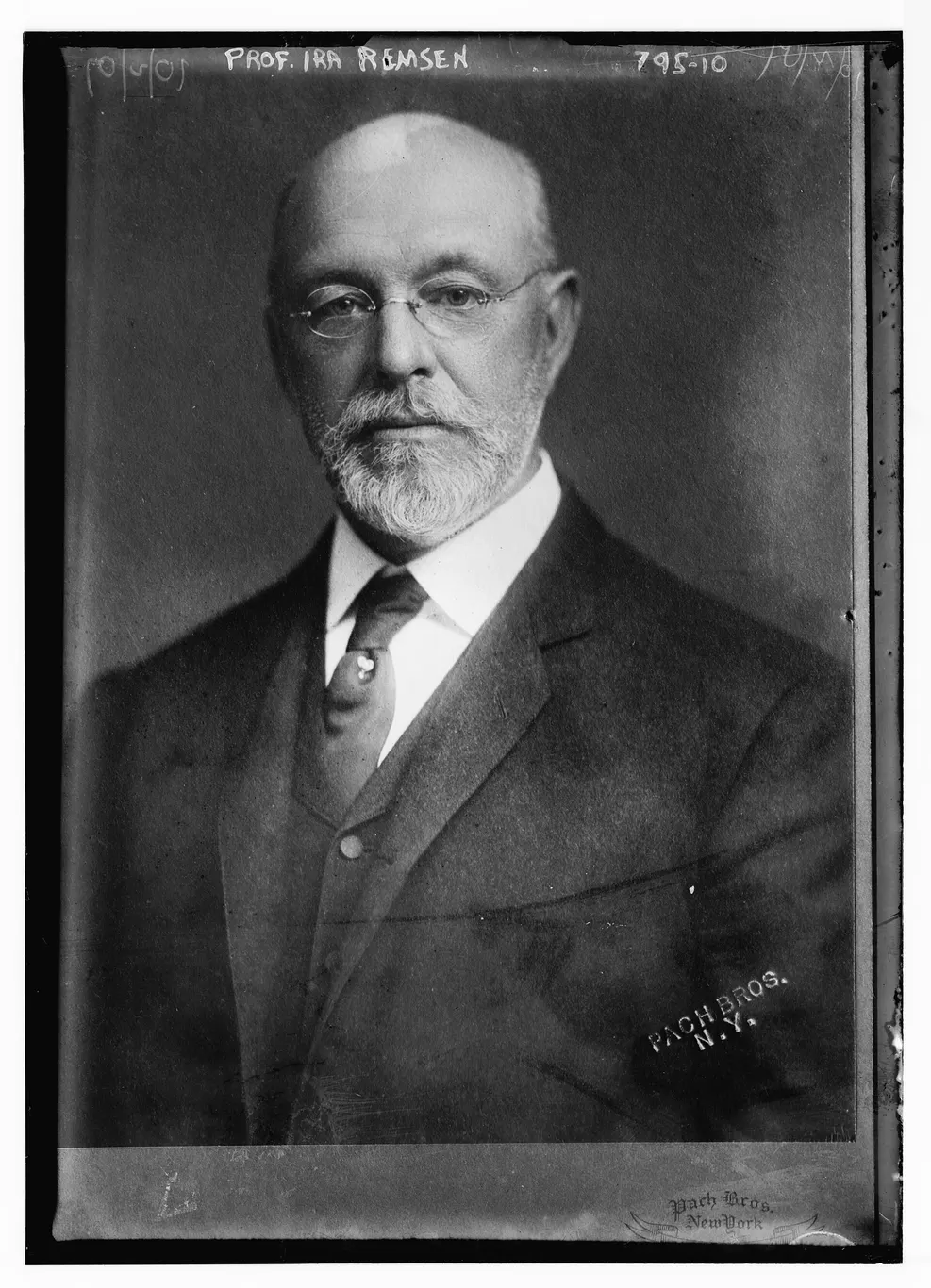
In January 1908 Roosevelt asked Ira Remsen of Johns Hopkins, who had co-discovered saccharin, to gather a board of “eminent medical men or physiological chemists”.21 The first questions on its list included sodium benzoate, the ketchup preservative.21 Its answer, published in 1909, was that in quantities under half a gram a day benzoate did no harm.22

Heinz advertises against benzoate
In 1909 Heinz ran an advertisement headed “Should Know about Soda in Foods!”, stating that benzoate was not in Heinz 57 Varieties.23 It ran in the same year the Referee Board’s report came out. Another advert from the campaign said, in capitals, that the US government said benzoate “Produces Injury to Digestion and Health”.3 Wiley’s Bureau of Chemistry had said so in Bulletin 84, published in July 1908; the President’s own referees had said rather the opposite.24 Heinz bought a two-page spread in the Saturday Evening Post,3 and “Pure food products” was painted on his pier.10

By 1911 Heinz ketchup dominated the American market. The food historian Andrew F. Smith put it this way: “People got frightened of ketchup… and if you want to have ketchup and you want to be safe you go for Heinz.”3
Heinz’s own preservatives
Before the crusade, Heinz had used preservatives in his own ketchup: first salicylic acid, then sodium benzoate.12
In 1875 his first pickle firm had gone bankrupt, owing far more than it owned.25 One account says he was then arrested twice, and that in January 1876 he was reportedly tried for fraud and acquitted.26 He kept a notebook of every creditor and later repaid them, with interest.2526
Wiley resigns
Wiley’s opponents went after him in 1911 over the pay of an outside expert he had hired; President Taft cleared him.27 On 15 March 1912 he resigned, saying the law’s principles had been “paralyzed or discredited”.27 He went to Good Housekeeping, at about twice his government salary, to run its testing laboratory.4 One headline read “Women weep as watchdog of the kitchen quits”.28 He later wrote The History of a Crime Against the Food Law.27
By 1915 most of the big ketchup makers had dropped preservatives and copied the Heinz recipe.3 Henry Heinz died in Pittsburgh on 14 May 1919.29 His biographer summed him up as “idealism and noble purpose compounded with self-interest”.3 Wiley got the principle. Heinz got the shelf.
Sources
-
The St. Paul Globe, 20 August 1903, p. 11, Chronicling America, Library of Congress: “Twelve-Year-Old Emma Setley Is Badly Cut by Flying Glass.” ↩
-
A. W. Bitting, Experiments on the Spoilage of Tomato Ketchup, US Department of Agriculture, 1909. ↩ ↩2
-
Atlas Obscura, the history of Heinz ketchup, quoting the food historian Andrew F. Smith and Heinz’s biographer Robert C. Alberts. ↩ ↩2 ↩3 ↩4 ↩5 ↩6 ↩7 ↩8
-
Science History Institute, “Harvey Wiley’s Fierce Pursuit of Food Safety”. ↩ ↩2 ↩3
-
Wild World of History, “Where did Heinz get the 57 Varieties tagline”. ↩
-
Smithsonian Magazine, “There Never Were 57 Varieties of Heinz Ketchup”. ↩
-
Flatiron NoMad Partnership, electric signage in the district. ↩
-
Heinz History Center, Heinz Pier and the World’s Fairs; Boston Public Library postcard, Heinz Pier, Atlantic City. ↩ ↩2
-
National Geographic, “How Henry Heinz used ketchup to improve food safety”, February 2019. ↩ ↩2
-
Nashua Telegraph, “When America was terrified of ketchup”, 19 January 2023. ↩
-
The Henry Ford, Heinz horseradish bottle, about 1891: “Heinz’s clear glass bottles were appealing to look at and allowed customers to see the quality of the product.” ↩
-
National Geographic, February 2019 (note 12); the Act was signed on 30 June 1906. ↩
-
Harvey Wiley’s account, reproduced by Suzanne White Junod, US Food and Drug Administration. ↩
-
Ira Remsen, “The United States Referee Board”, Scientific American, 26 August 1911. ↩ ↩2
-
Referee Board of Consulting Scientific Experts, USDA Report No. 88, 1909: benzoate did no harm in quantities of less than half a gram a day. ↩
-
Smithsonian Archives Center, N W Ayer advertising collection, Heinz advertisement, 1909. ↩
-
US Bureau of Chemistry, Bulletin 84, part 4, Benzoic Acid and Benzoates, 20 July 1908. The Referee Board’s finding is in note 22. ↩
-
Robert C. Alberts, “The Good Provider”, American Heritage, 1972. ↩ ↩2
-
Bill Dietrich, “H. J. Heinz: Relish Success”, Pittsburgh Quarterly, 2008: “Twice he was arrested and released on bail”, and he was “tried for fraud in January of 1876 and received a merciful acquittal”. This is the only source we found for the arrests and the trial. ↩ ↩2
-
Wikipedia, “Harvey Washington Wiley” (note 15). ↩ ↩2 ↩3
-
Wikipedia, “Henry J. Heinz” (note 18). ↩